
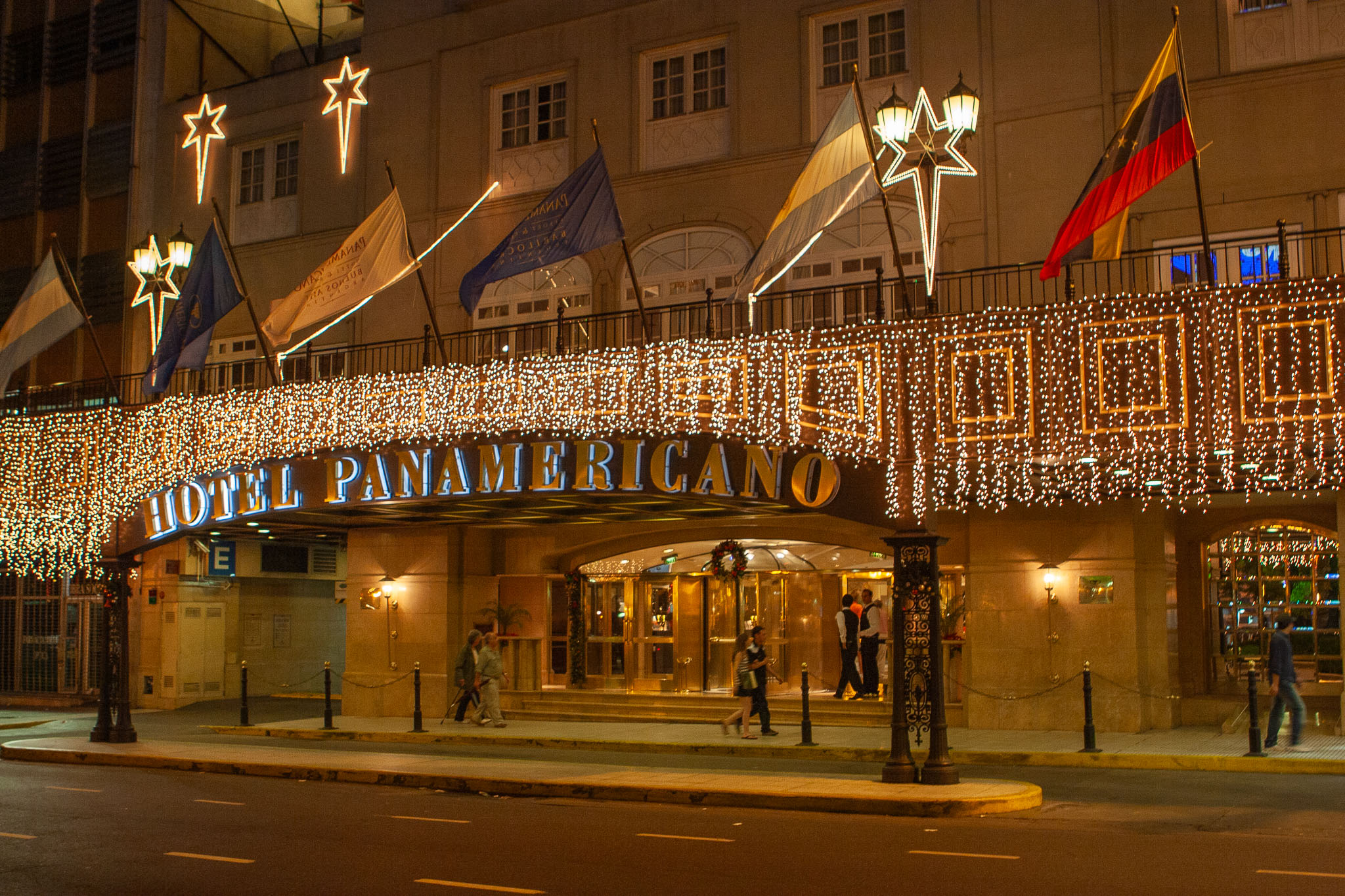
Buenos Aires on 31 December is hot. The city empties for the holidays in a way that Melbourne does not, and the parts that stay open do so at their own pace.

From a high window at my digs at the Hotel Panamericano, the roofscape is the whole argument about this city in one frame: a tiled dome and a bell tower and a courtyard of terracotta pantiles in the foreground, and immediately behind them a wall of 1970s concrete slabs and one glass tower under construction with the crane still on it. Nothing is reconciled. Nothing needs to be.


Puerto Madero
The old docks have been converted — four brick warehouses, 1890s, now offices and restaurants, with yachts and catamarans moored in the dique in front of them and the new towers of the east bank going up behind. Tied up along the quay is the square-rigger ARA Presidente Sarmiento with a gilded figurehead on the bowsprit, the standing rigging set up tight, the whole bow carved and scrolled in green and gold.


The Catedral Metropolitana on the Plaza de Mayo does not look like a cathedral. It looks like a bank — twelve Corinthian columns and a pediment with a carved relief across it, and buses going past the steps. The relief is Joseph meeting his brothers; the building behind it is where San Martín is buried.


Under the Obelisco
At night there is a concert on Avenida 9 de Julio at the foot of the Obelisco. A full orchestra on a lit stage, trusses of lights above them, several hundred people standing, and the shaft of the Obelisk going up out of the frame into the dark. Free, open air, and one of the few places in the city that appear to be busy.


The Obelisco is 67 metres and went up in 1936 in four weeks. It has been painted, protested at, wrapped in a giant condom for World AIDS Day, and used as the fixed point for every celebration this city has. Tonight it is a backdrop for the strings.
