Glasgow, Greenock, and aboard Le Lapérouse
Thursday 24 September 2026
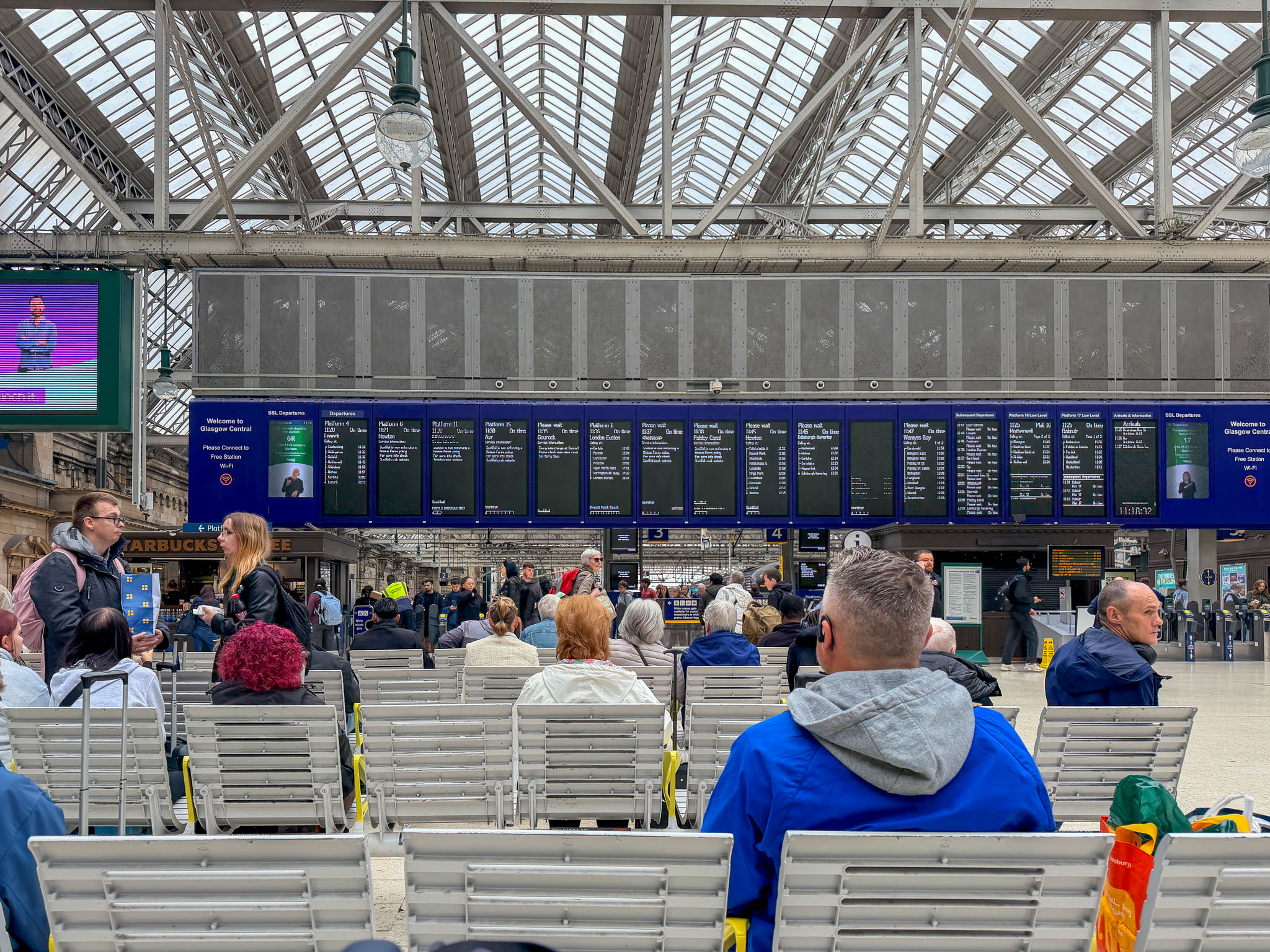
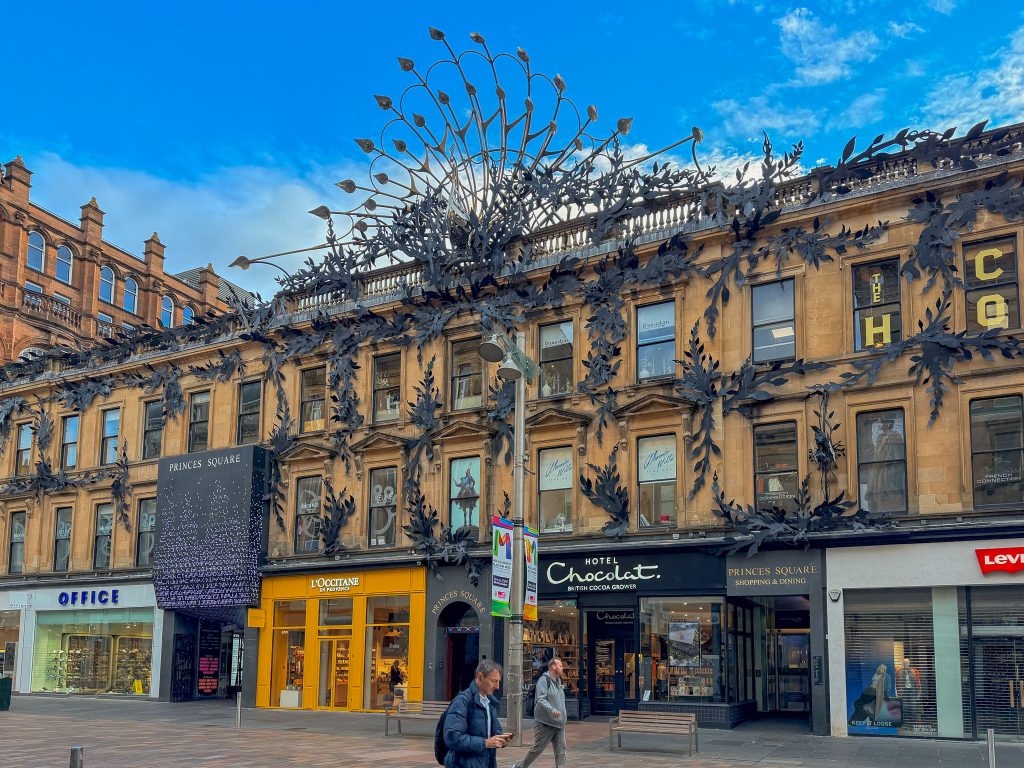
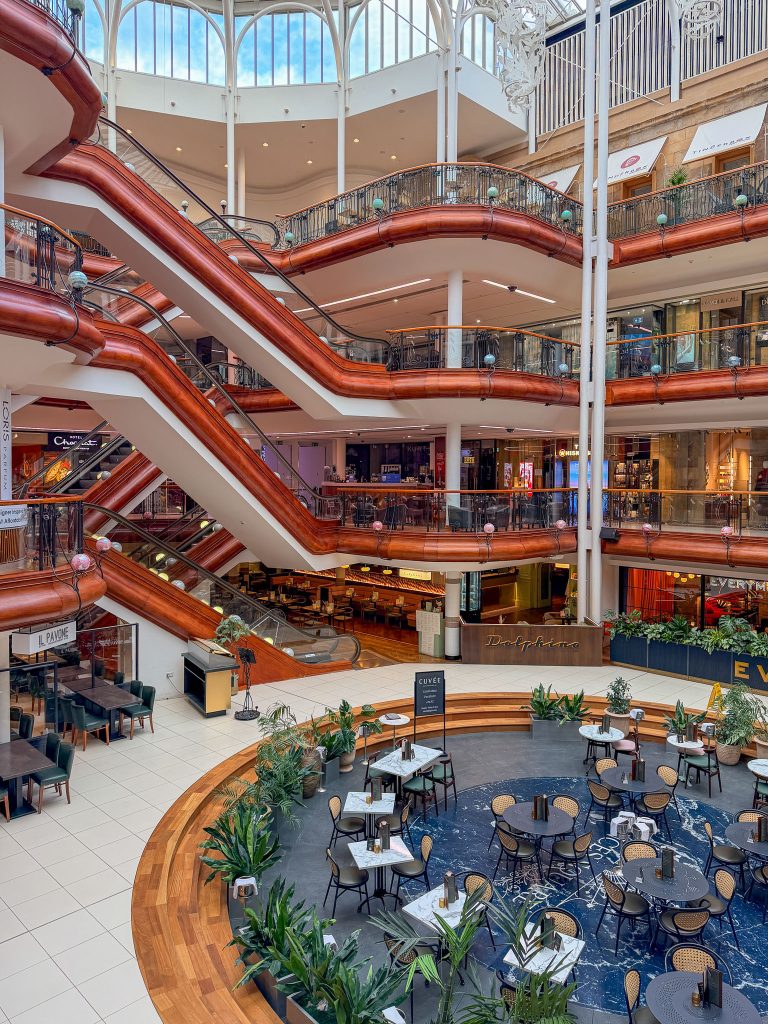
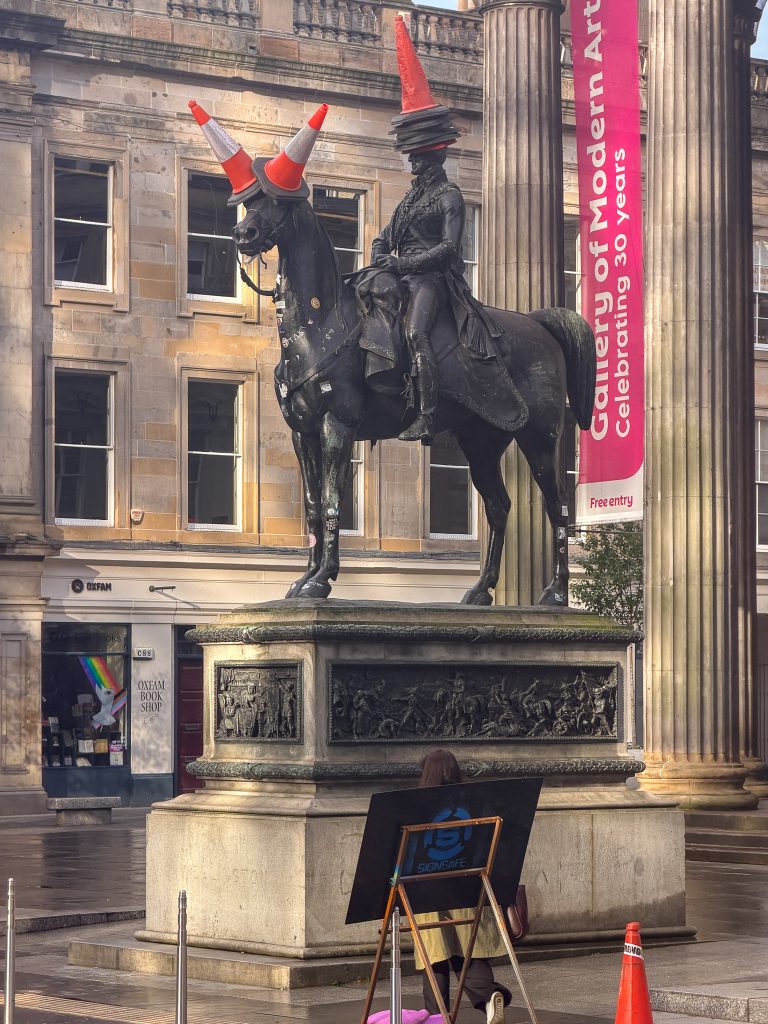
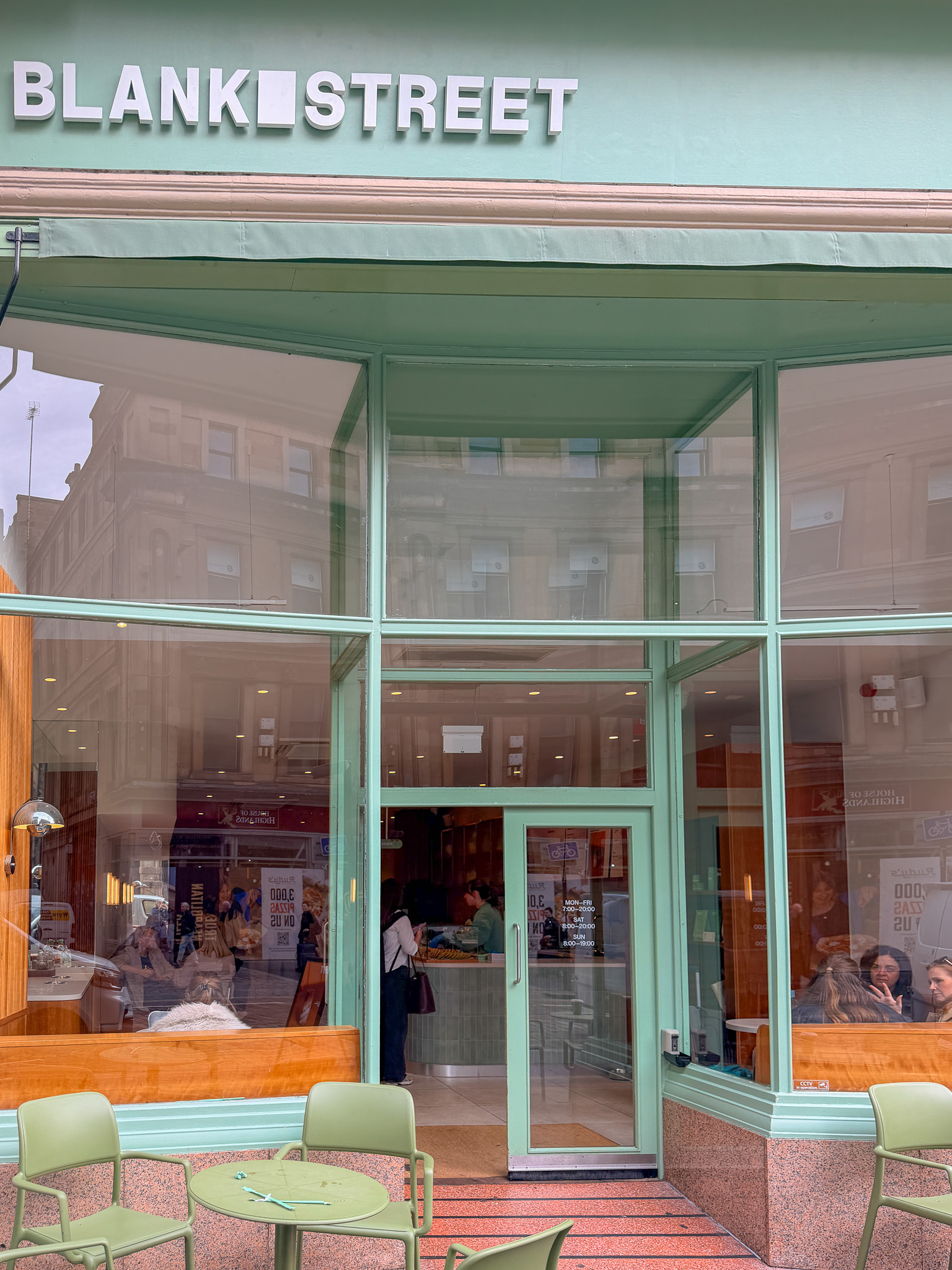
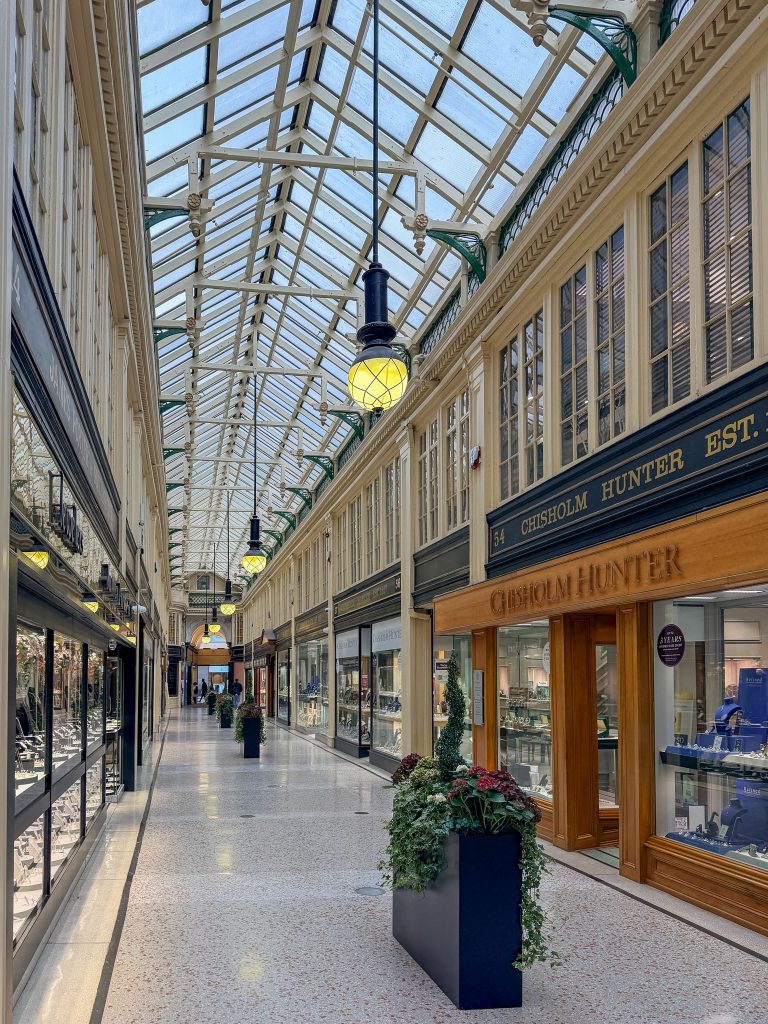
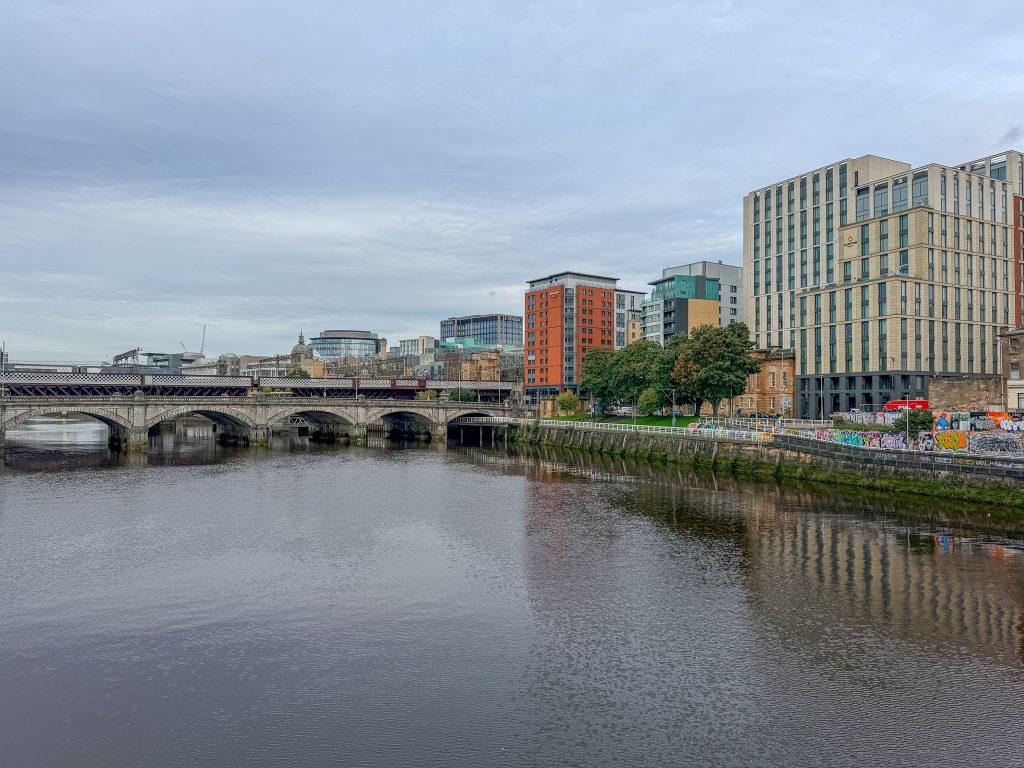
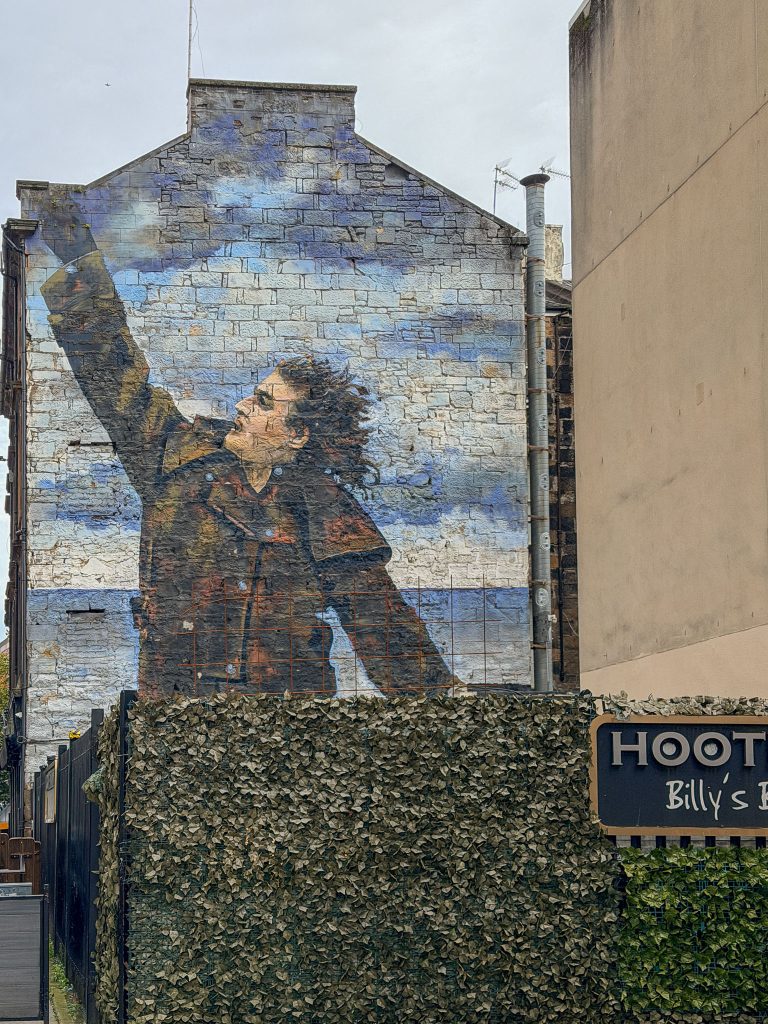
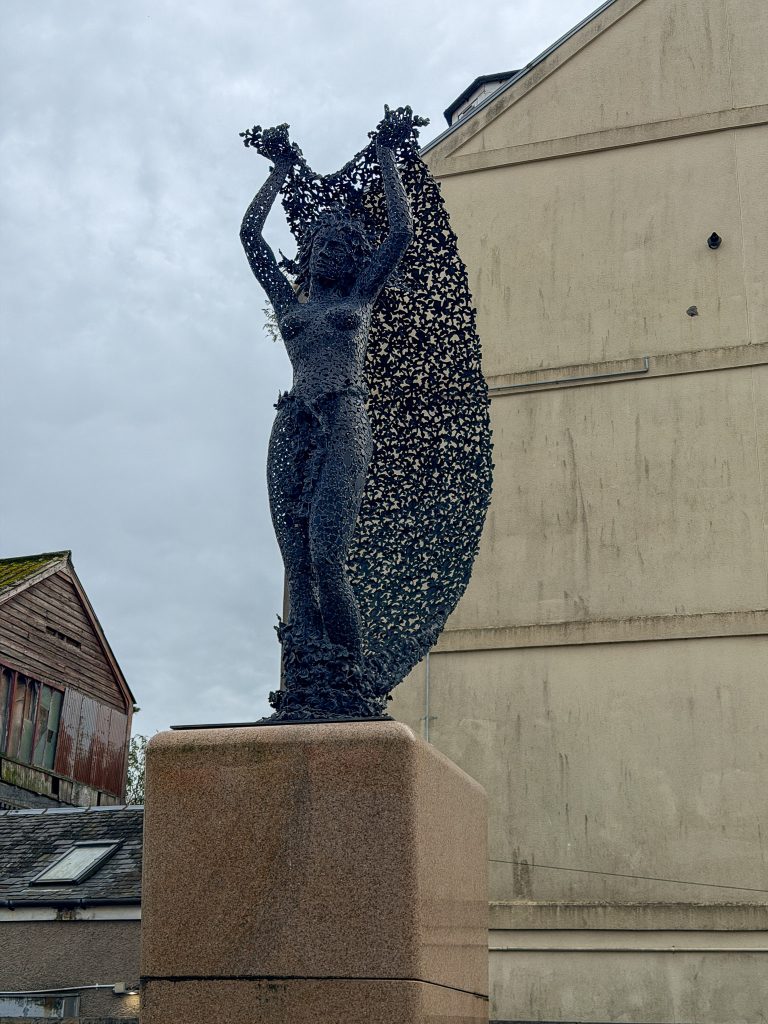
It’s only a few hours in Glasgow today before I board the 11:35 train to Greenock. I could take a much later one, but risk management decrees that I can’t afford to miss the ship, so better to leave early. But first, coffee. On Buchanan Street, Princes Square has a wrought-iron peacock fanned out over its front door. Inside, the square is a covered atrium of timber and copper escalators. The Duke of Wellington is outside the Gallery of Modern Art as usual, with a cone on his head and one on each of his horse’s ears, and GoMA is flying banners for its 30 years. I decide coffee at Blank Street is the best option. It is doing a roaring trade and I’m lucky to find a seat at the back of the cafe. Suitably caffeinated, I wander through the the Argyll Arcade’s glazed row of jewellers, and end up on looking out over the Clyde from a suspension footbridge. On a gable end there’s a painted mural of a woman reaching up into the sky.
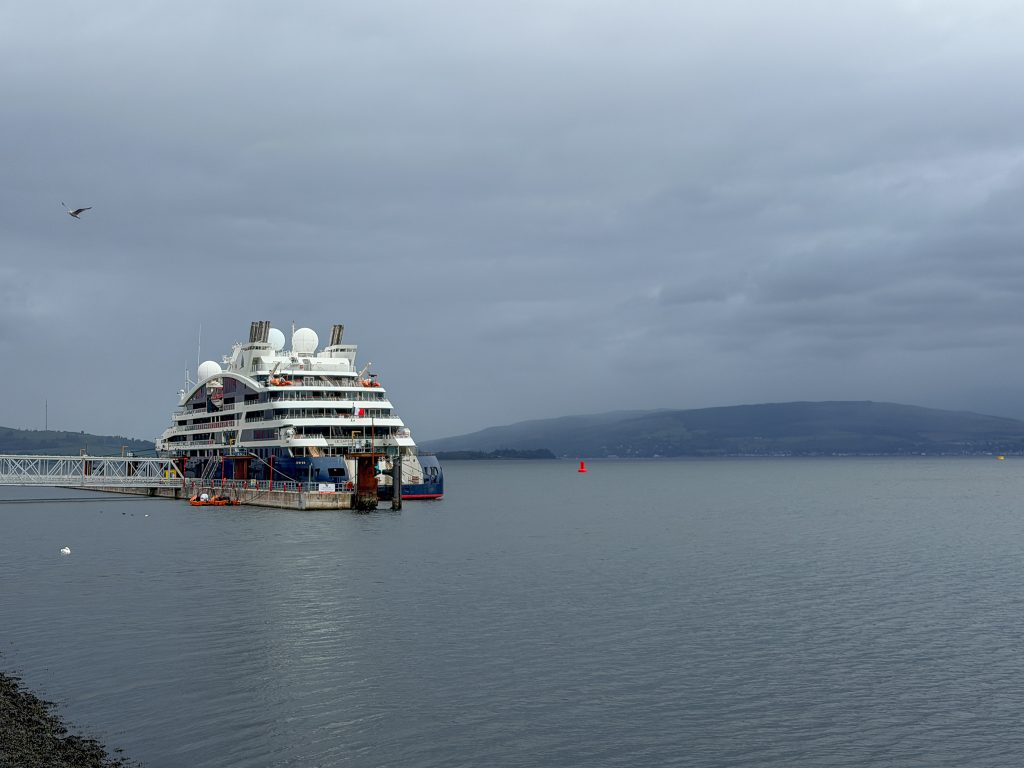
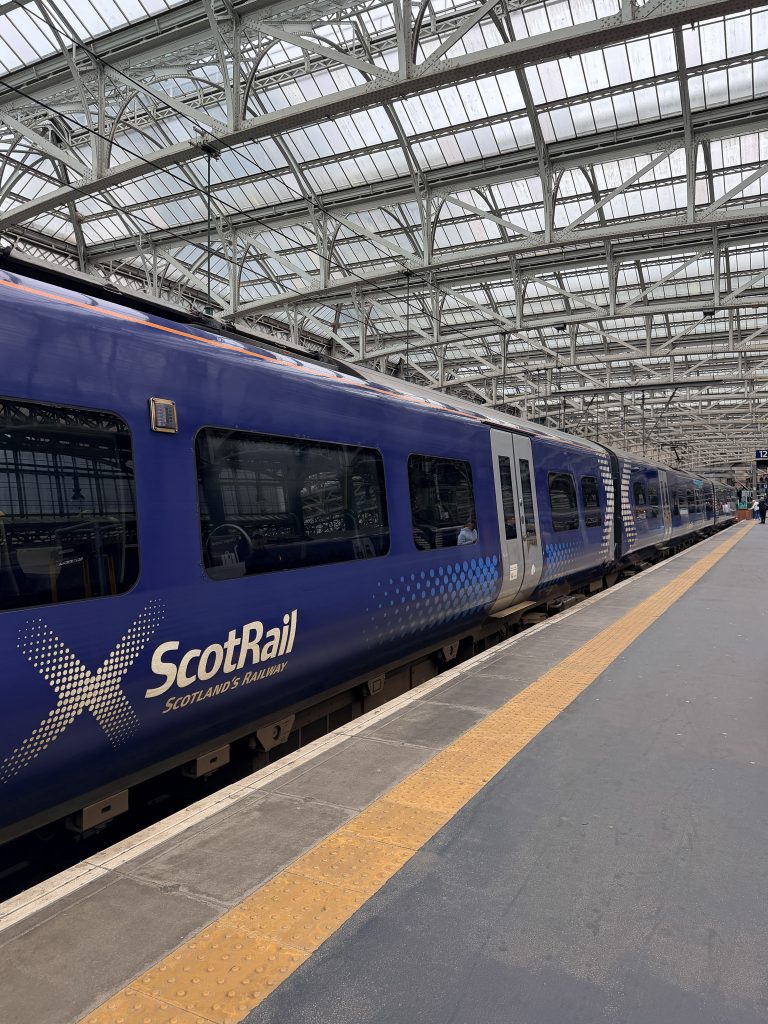
Today I’m boarding Le Laperouse, which is departing “Glasgow” from “Greenock Cruise Terminal”, 45 minutes from Glasgow by train. The train ticket from Glasgow Central to Greenock Central is an Anytime Day Single, which allows me to take any Scotrail train to Greenock. I expected the train to be busier, and parked my suitcase in the luggage storage area of the train carriage, but there are no more than 3 passengers in the carriage for the entire journey. There is a conductor on the train, who asks whether it’s my suitcase, and is on his way again. It starts to rain as I arrive in Greenock, and a taxi to the cruise terminal is 5 quid well spent. After I’ve dropped my bags at the terminal, I realise I’ve packed my umbrella into my suitcase, and pay 3 pounds for another at a dollar shop near the terminal.
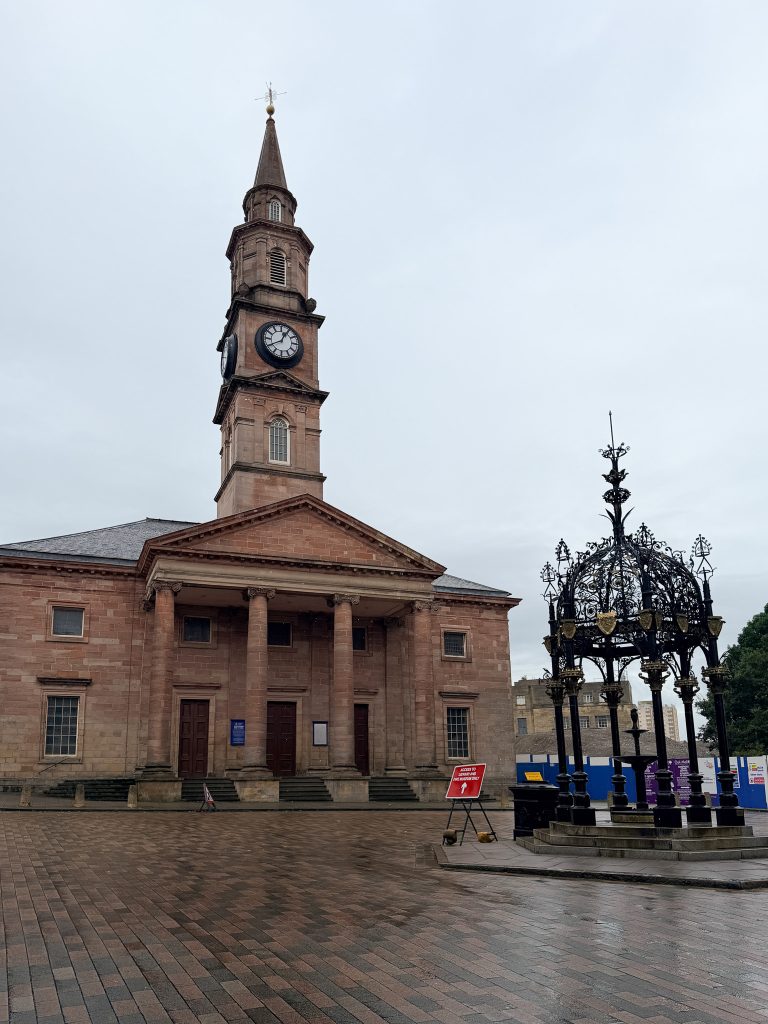
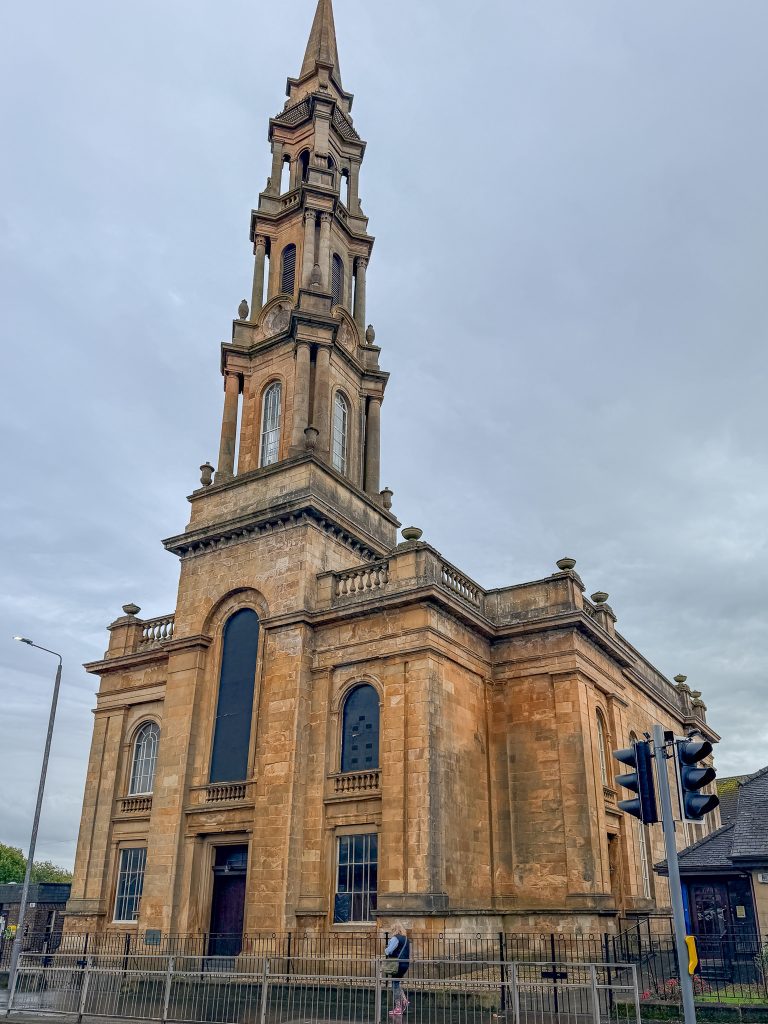
I’ve got a few hours to kill before boarding the ship, so by 1pm I’m in Cathcart Square, where the Victoria Tower of the Municipal Buildings — 245 feet, finished in 1886 — rises over everything. There’s a clock-towered church with an ornate iron fountain beside it (closed when I’m passing by), and a pub called The Hole in the Wa‘. A plaque on the Westburn church with the three tier tower records the union on 27 April 1966 of “the West Kirk 1591 and the Gaelic Parish Church 1791”. The some of the windows are boarded up, and it looks like vandals have smashed their way in through one of the ground floor windows.
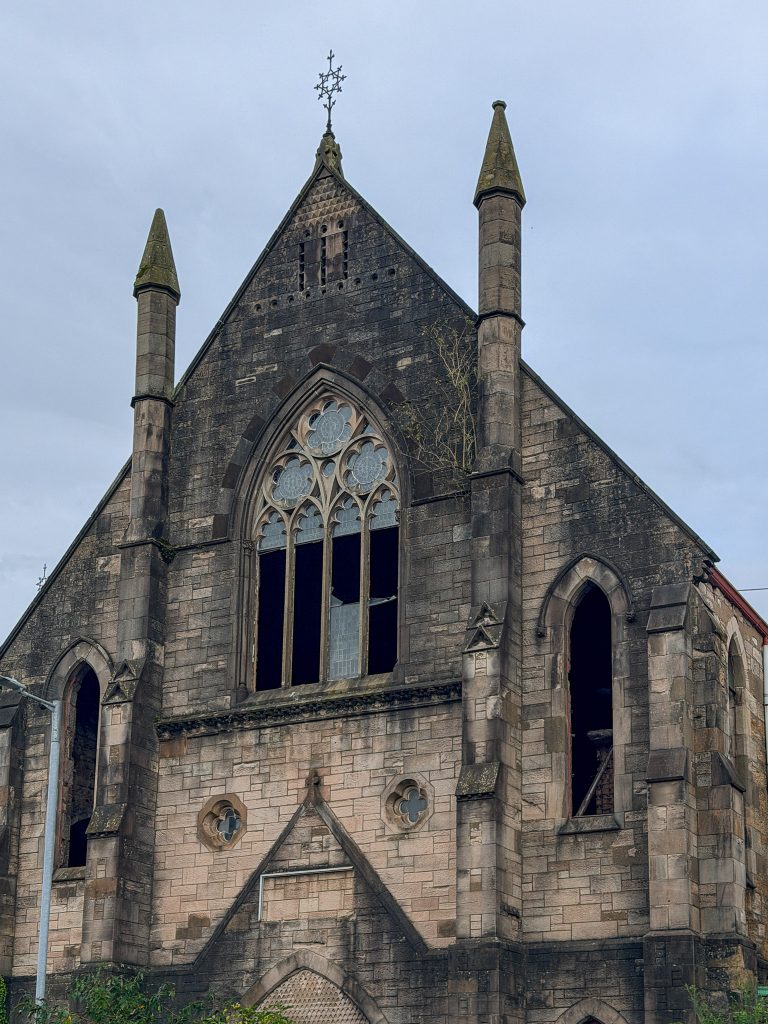
The former Methodist church on Ardgowan Street still has most of its roof, but the tracery is gone from the windows, and there’s a lingering whiff of burnt old timbers. It was completed in 1881 and closed as a church in 2017. Ardgowan Hospice bought it in 2016 as part of wider redevelopment plans. In January 2025 the council refused permission to knock it down, saying demolition would breach national heritage policy. The hospice applied again after Historic Environment Scotland withdrew its objection, and on 19 June 2026, the council said yes. It’s to become a community garden where patients and local groups can grow vegetables, fruit and herbs. There was a minor fire here in 2012, but the missing windows look like the start of the demolition rather than fire damage. It’s derelict, but sad to see this architectural example being thrown away.
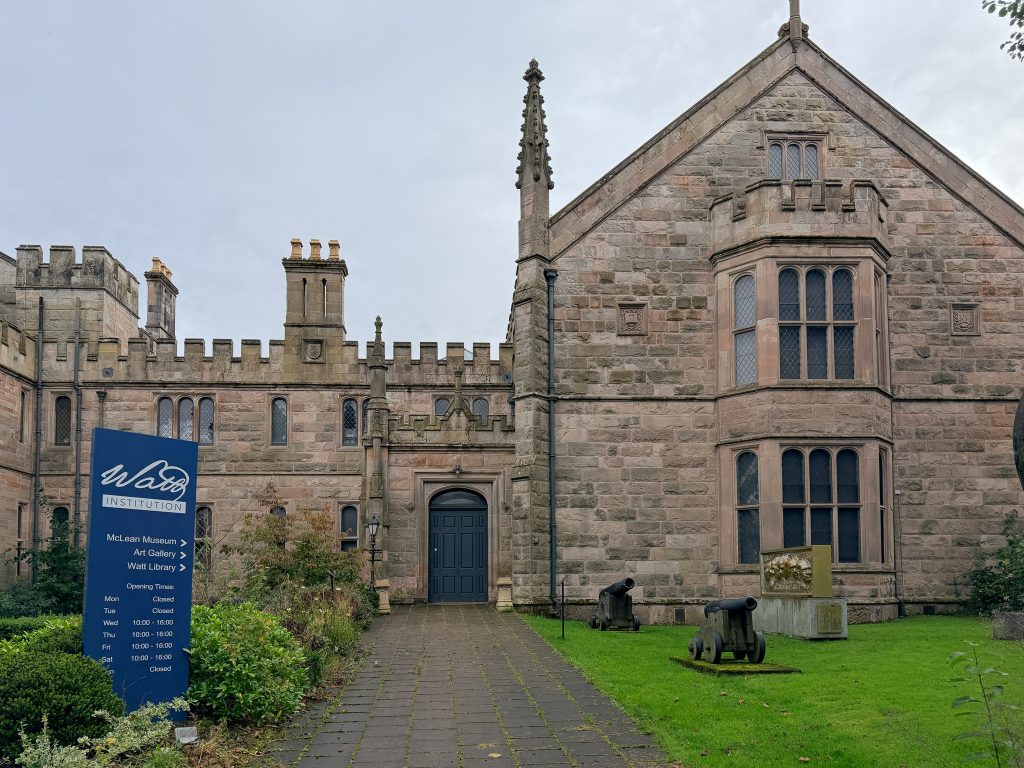
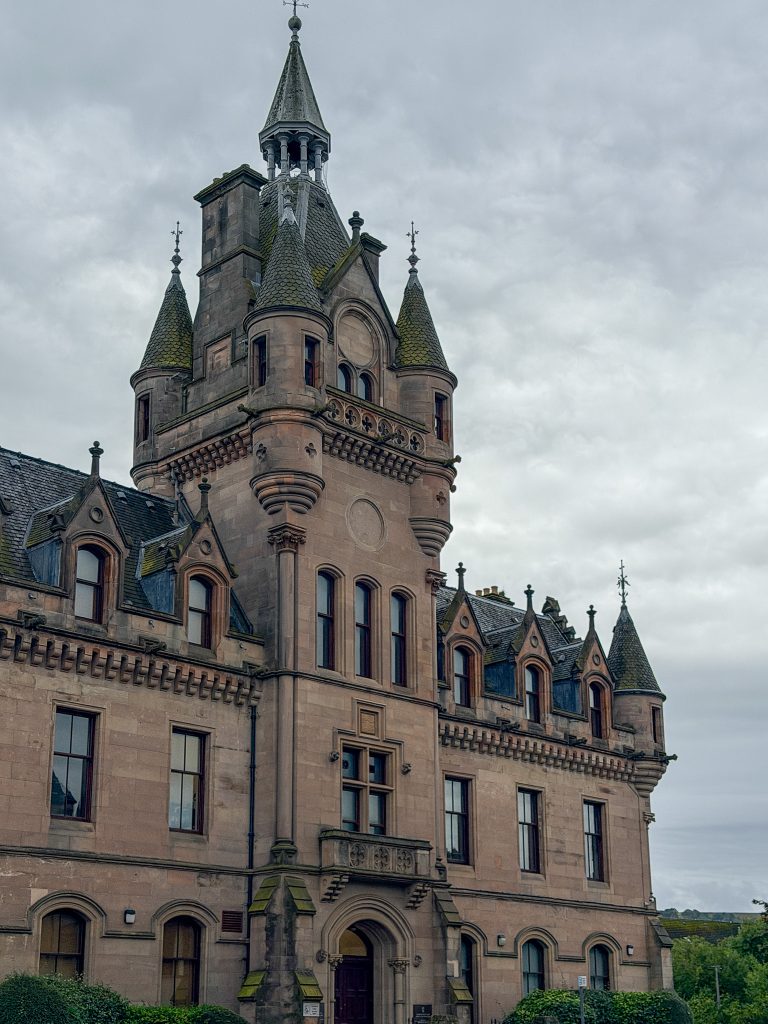
I notice what looks like a baronial castle while I’m wandering the back streets of Greenock and go to investigate. It’s the Watt Institution, and apart from a closure notice on the gate there’s nothing on site to say what it is — so I look it up later. It’s two buildings. The first is the Watt Monument Library of 1837, designed by Sir Edward Blore — who also did the front wing of Buckingham Palace — to house the town’s library and Chantrey’s marble statue of James Watt. The second is the McLean Museum, added in 1876 and paid for by the timber merchant James McLean. It’s Category A listed, and there are old cannons on the lawn out front. The upkeep must be extraordinary.
Today there’s a notice on the gate — “currently closed to allow for essential building work”. It has been shut since autumn 2025, and this is the museum’s 150th anniversary year. Would have loved to see the interior! (N.B. Google is reporting it is temporarily closed, but other sites are reporting it reopened in October 2026.)
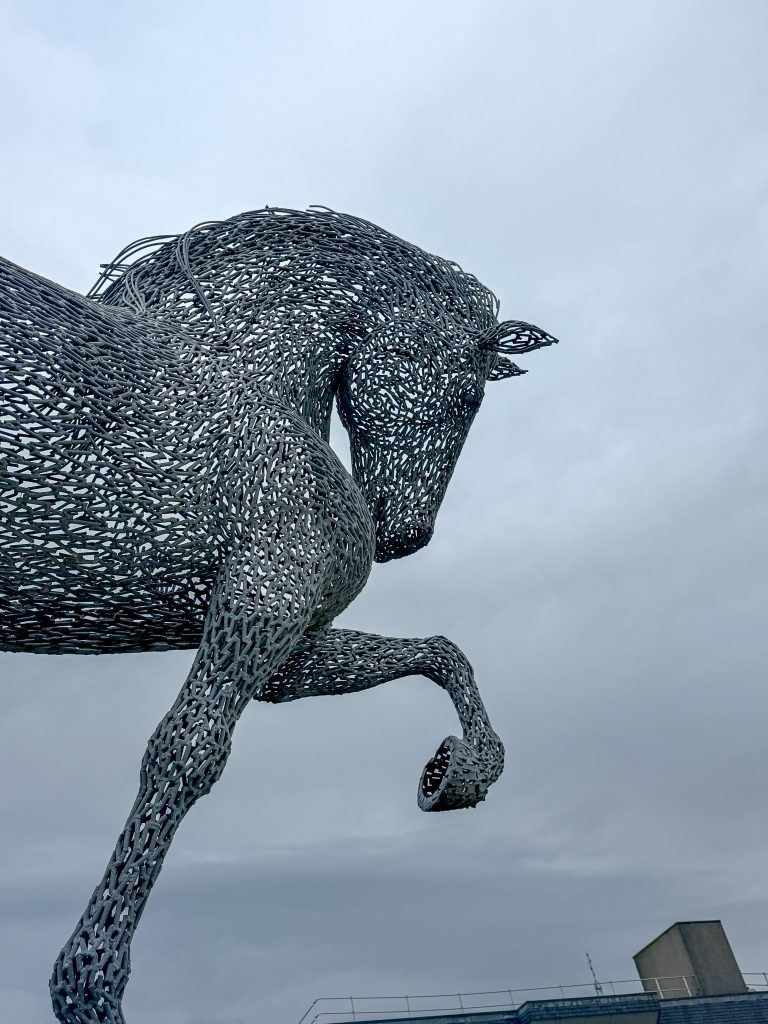
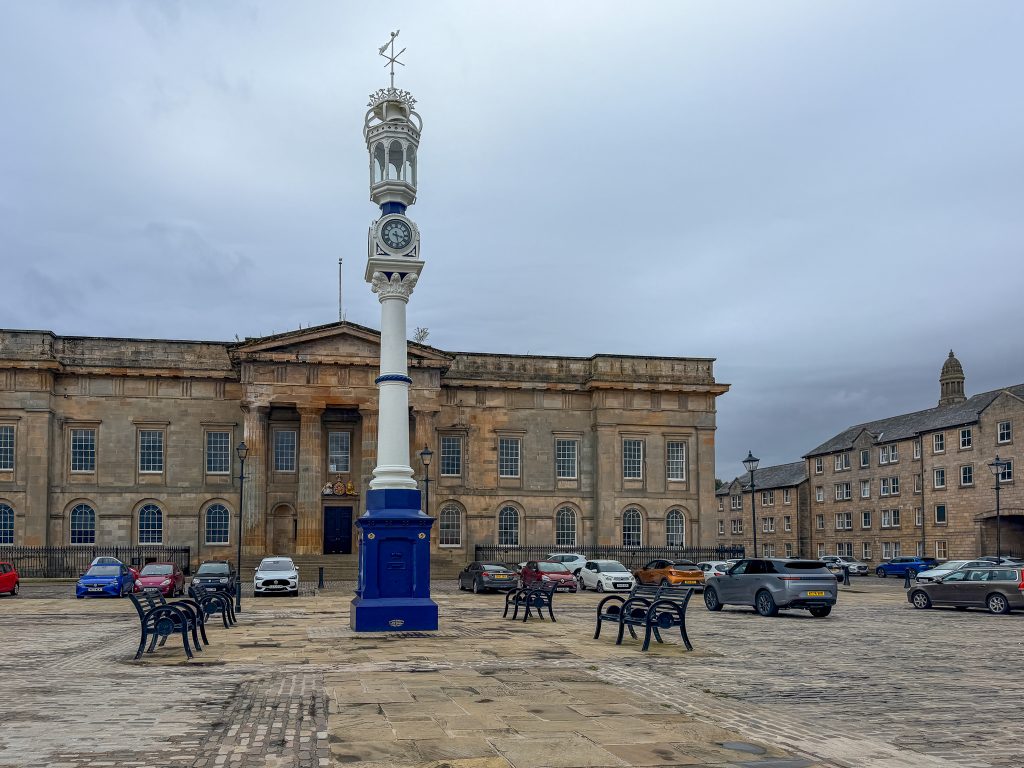
On the waterfront is Andy Scott‘s Ginger, a steel horse. The plaque tells the story. On 23 October 1889, some 500 yards from here, Ginger was pulling a cart of sugar on the quay at Albert Harbour when a wheel caught a mooring stanchion, and the horse went into the water and drowned. James Watt, who gave us “horsepower”, was born 100 metres west of the statue, on William Street. The Custom House, begun in 1817 to William Burn’s design, stands behind a column with a lantern on top. I stop for a pleasant lunch at the Beacon Arts Centre on the waterfront. The walk along the waterfront shows Greenock as it would have been in its affluent past, with an imposing Custom House to collect taxes.
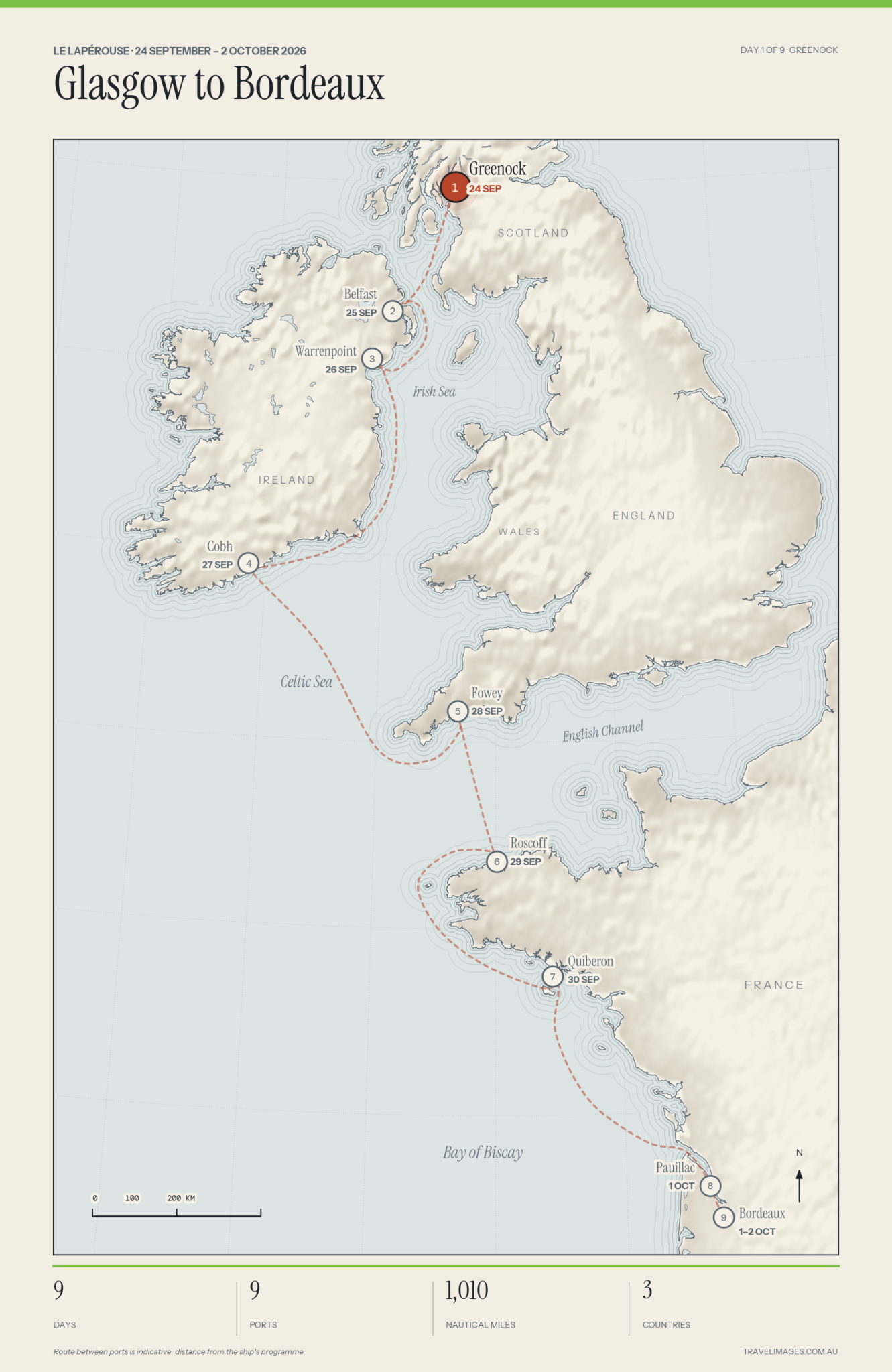
Soon enough it is time to board Le Lapérouse at 4pm. This will be an interesting voyage – I’m used to being on Deck 3, the best place in case of poor sailing conditions, but this time I was late booking and have a stateroom on Deck 6, the ‘top’ of the ship. The staterooms are the same, so it’s a case of paying to be higher up on the ship with a glass panelled balcony instead of a steel one. We sail at about 18:13, past a CMA CGM container ship and down the firth. The Captain announces after the safety drill that adverse weather means going to Belfast tomorrow instead of Portrush, with nine hours in port. Titanic news, indeed.