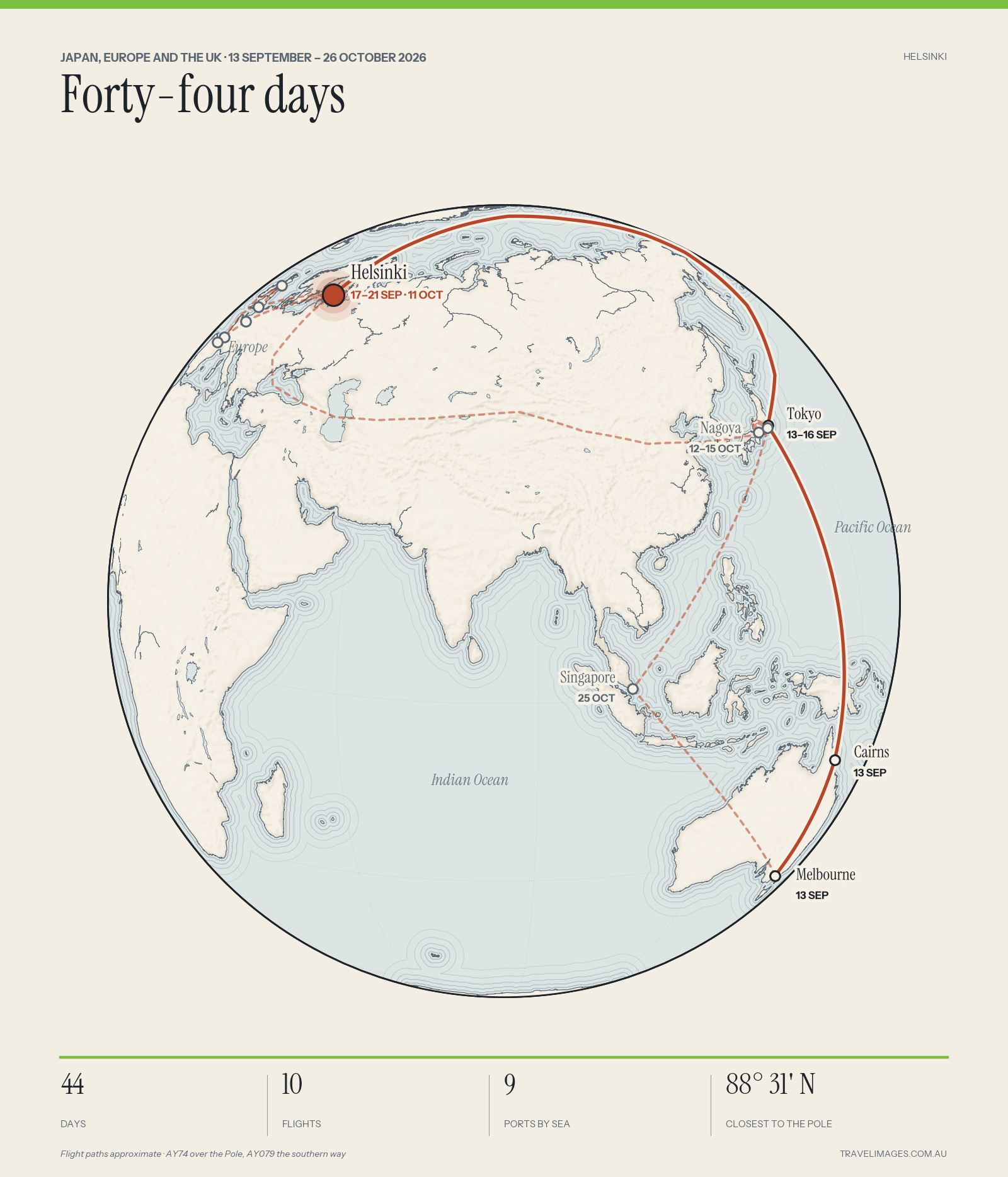
Eira, and a tower nobody can explain
Saturday 19 September 2026
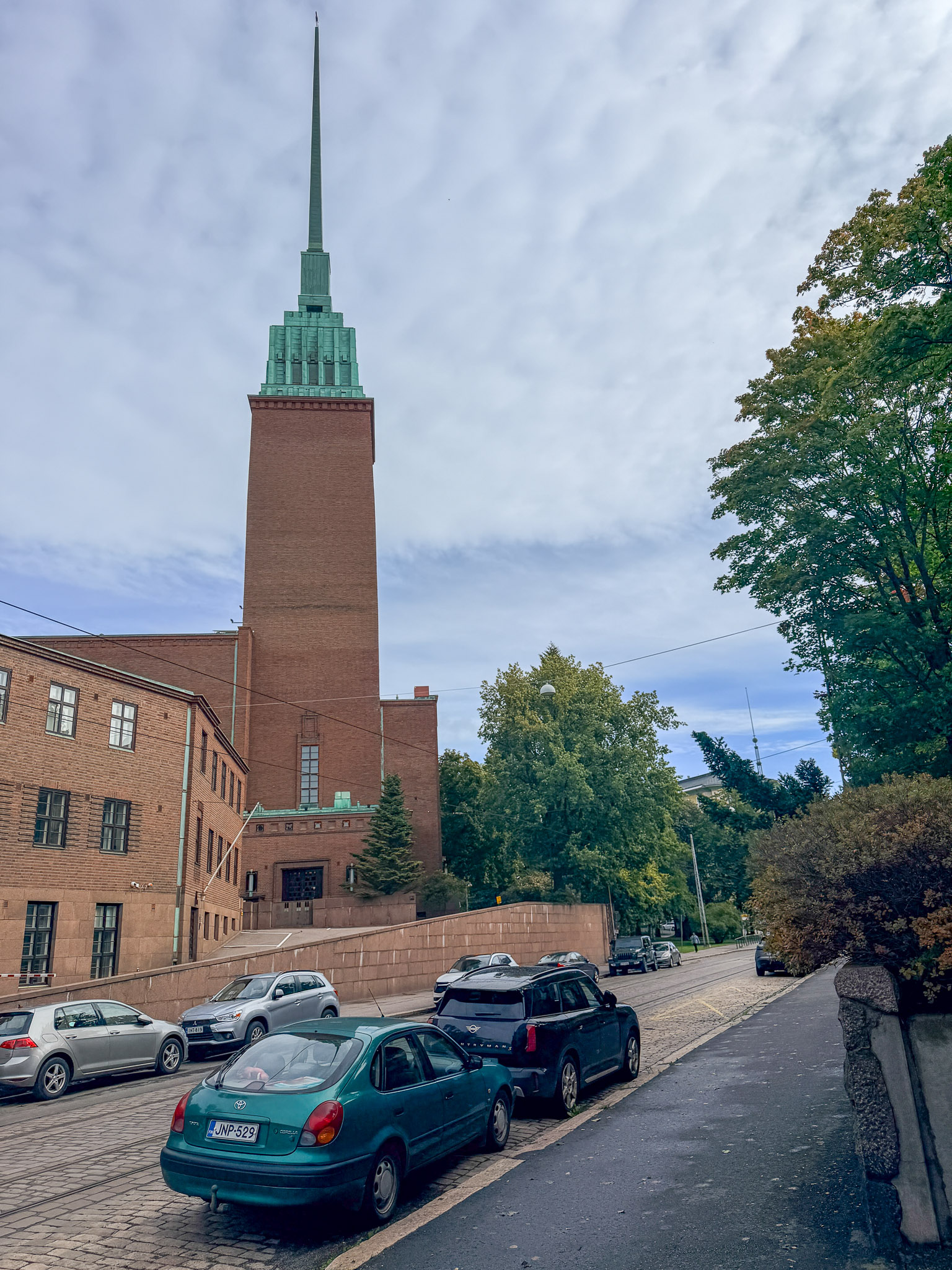
The Mikael Agricola Church is a plain brick tower with a copper needle of a spire on top. It went up in 1935 to a design by Lars Sonck, and it’s the landmark I’ve been navigating by all week. It’s closed to visitors when I walk past.
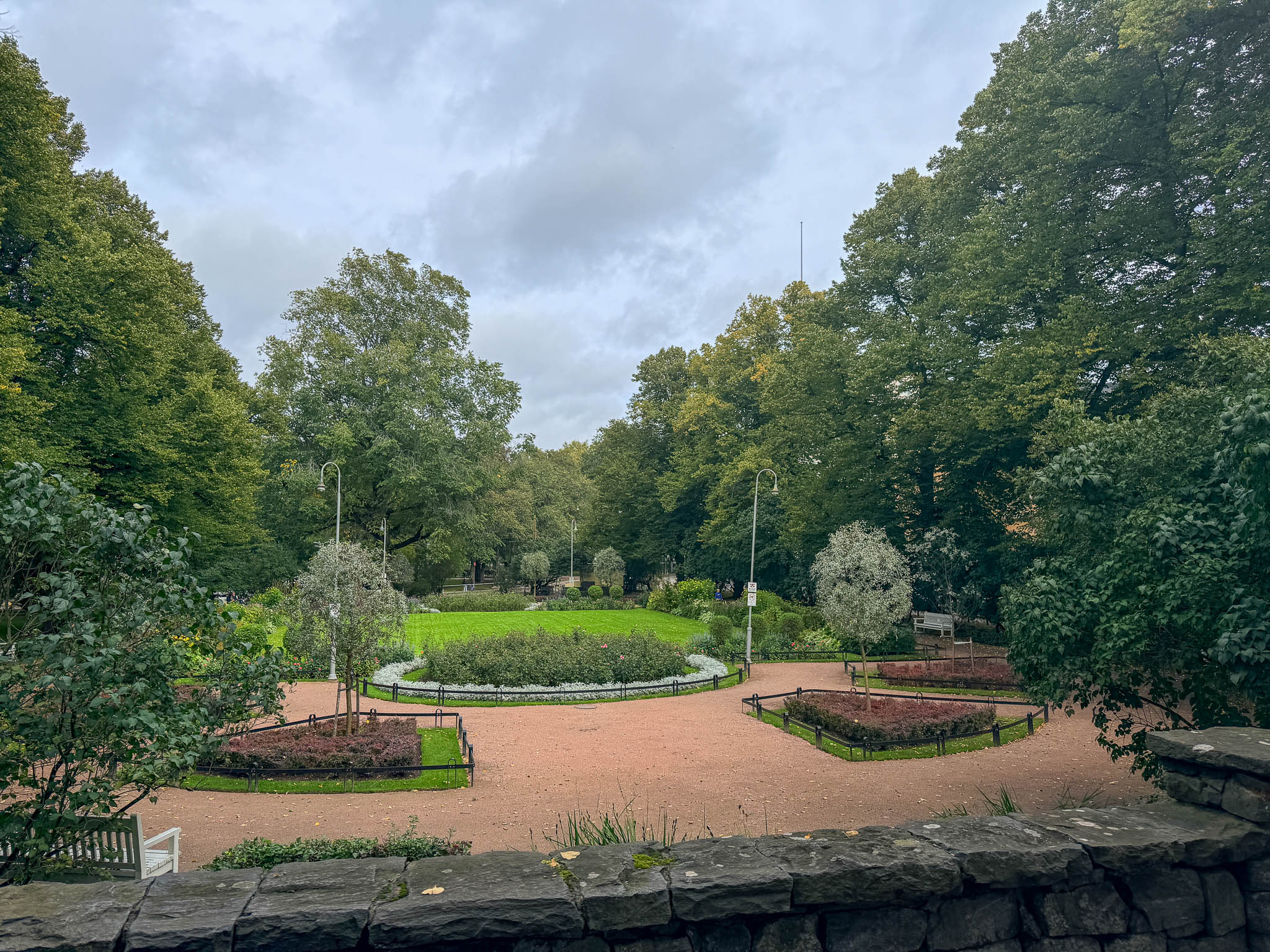
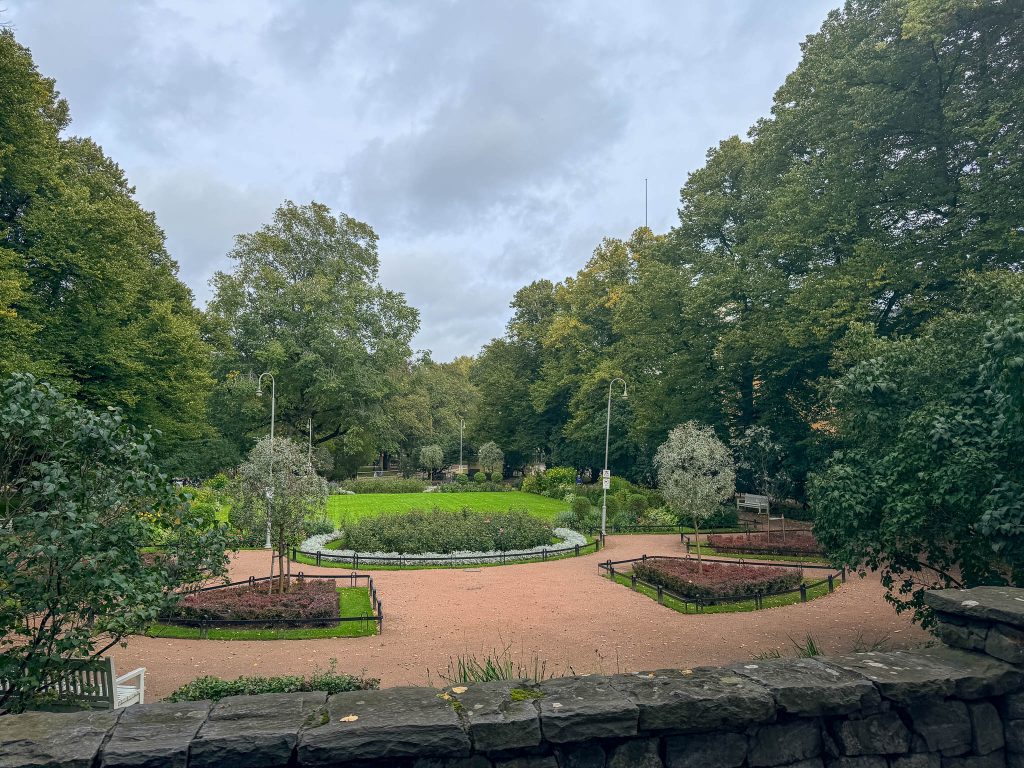
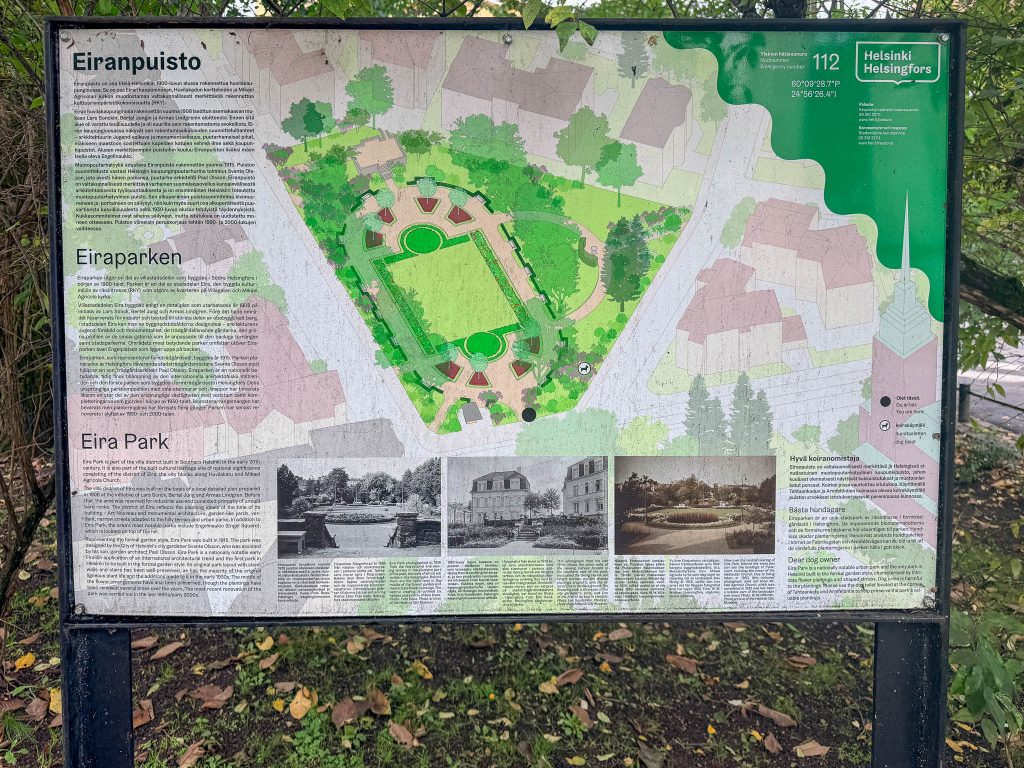
From its steps it’s a short walk to Eira Park — a formal garden laid out in a triangle between the villas, with gravel paths, clipped beds and a round lawn in the middle. It’s a very pleasant garden in a quiet, upmarket residential area of Helsinki.
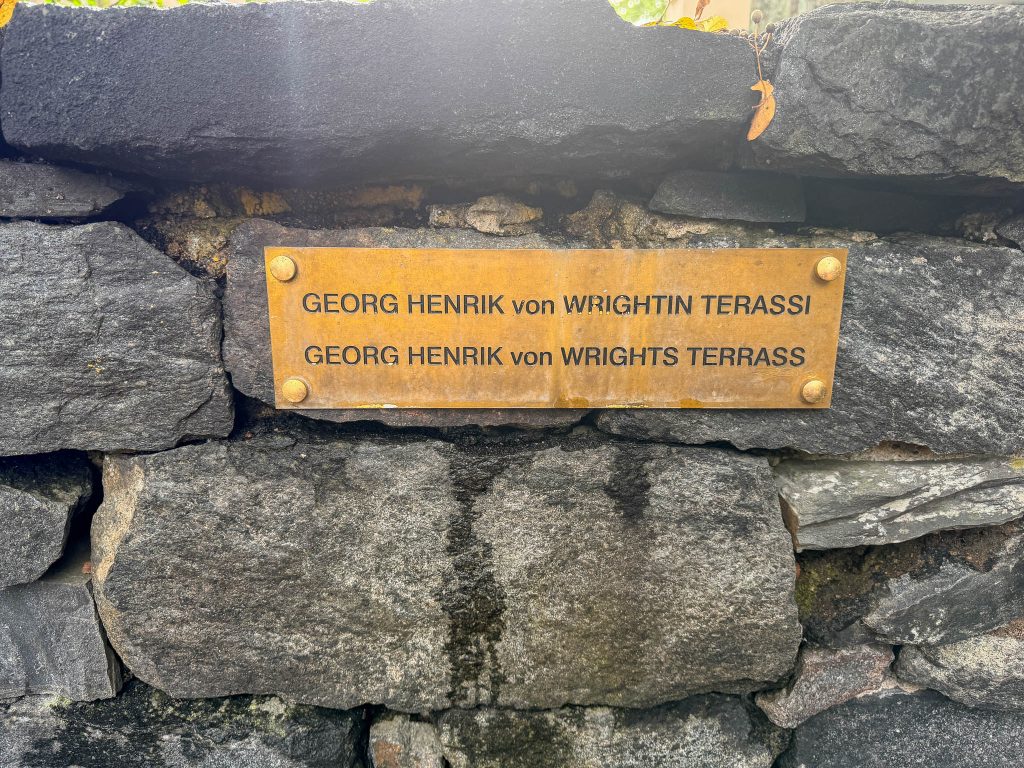
Set into the stone wall above it is a brass plate: Georg Henrik von Wrights terrass. That’s the philosopher, Wittgenstein’s successor at Cambridge.
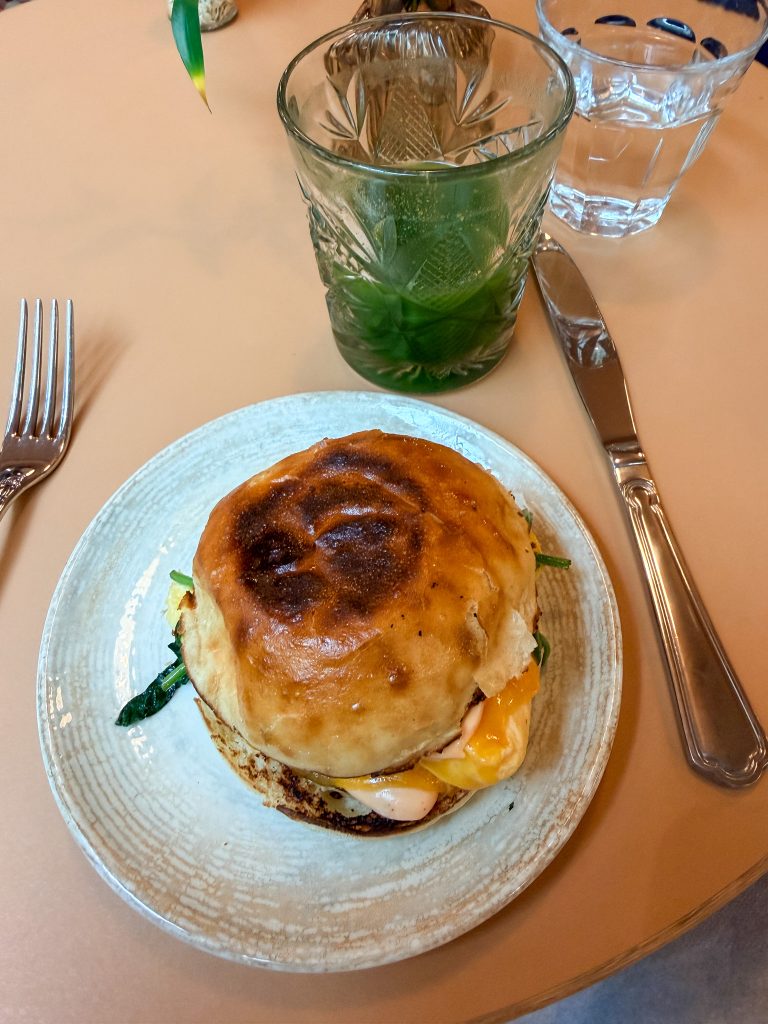
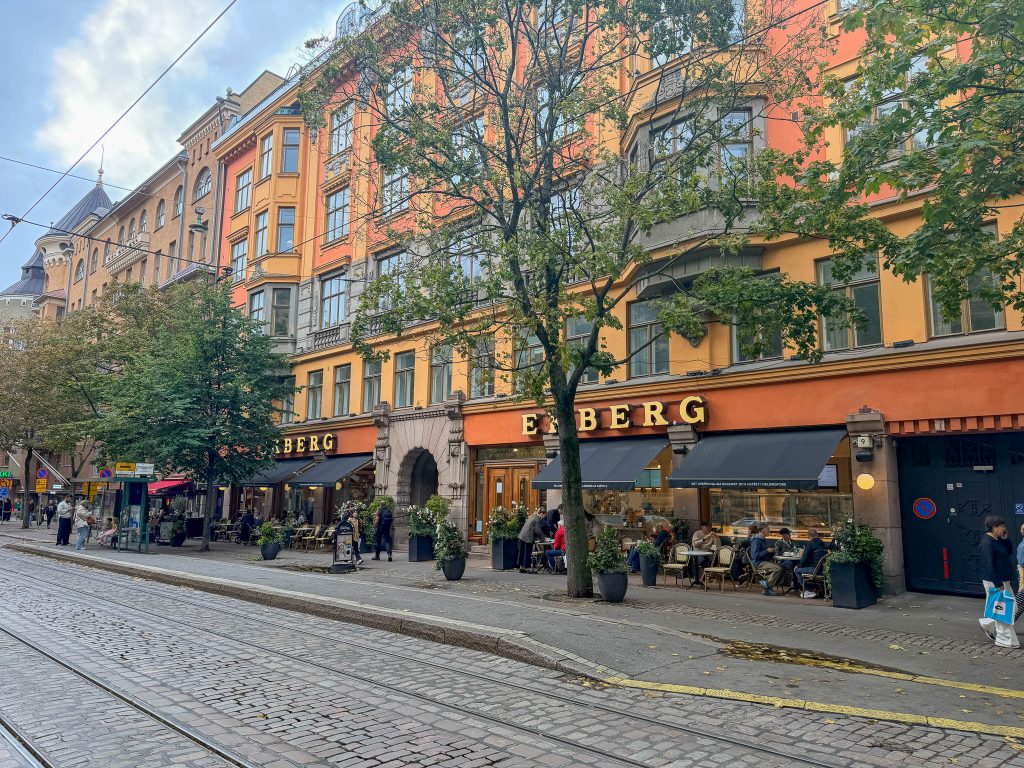
I catch the tram back to the Esplanadi area in search of lunch. It turns into an egg and spinach bun and a green juice. 40 euros at an upmarket cafe in one of the buildings off Esplanadi. A very expensive lunch! By late afternoon I’m on Bulevardi, with the trams running over the cobbles past Café Ekberg‘s gold lettering. Probably should have gone to Cafe Ekberg instead.
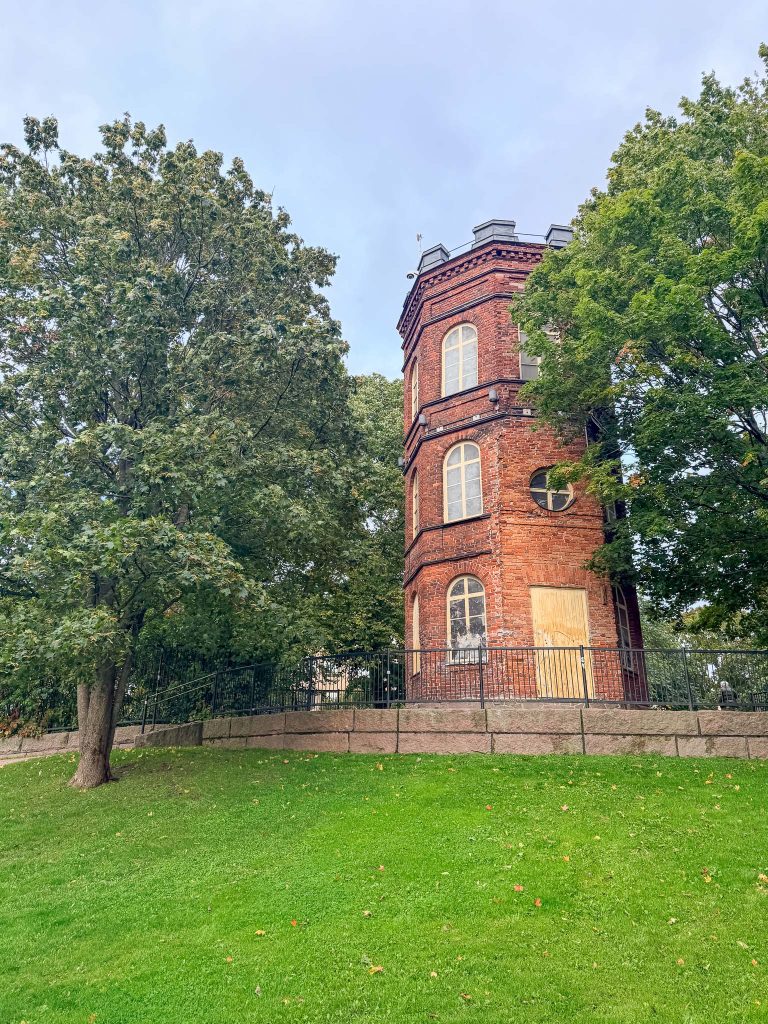
At the end of Bulevardi is Sinebrychoff Park, once the garden of the brewing family’s estate, which was open to the public as early as 1835. On the cliff at its southern end stands an octagonal red-brick tower, three storeys high, its windows boarded. Nobody seems sure what it was for. One account says it was purely decorative. The city library has it as a guardhouse, rejected as a lookout after an admiral’s inspection in 1854. A third says it was a signal tower during the Crimean War. It was built somewhere between the 1840s and 1865, depending on who you ask. It stood at the end of a warehouse called Siperia — Siberia — built over an ice cellar. The warehouse was demolished in the 1960s and the tower was left standing on its own. Rumour has it that it’s now storage for the local kindergarten.