Belfast: the Thompson Dock and Sailortown
Friday 25 September 2026
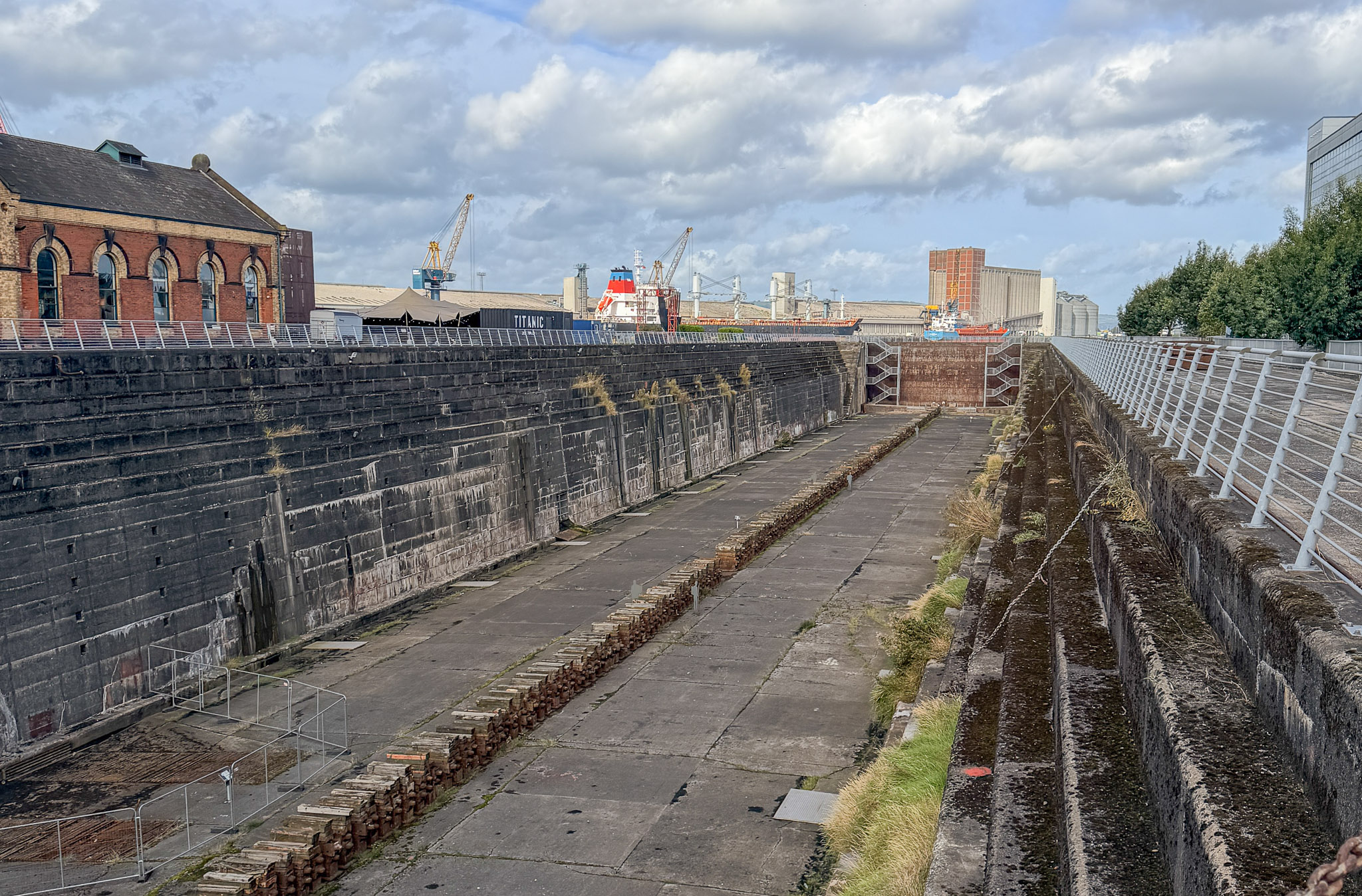
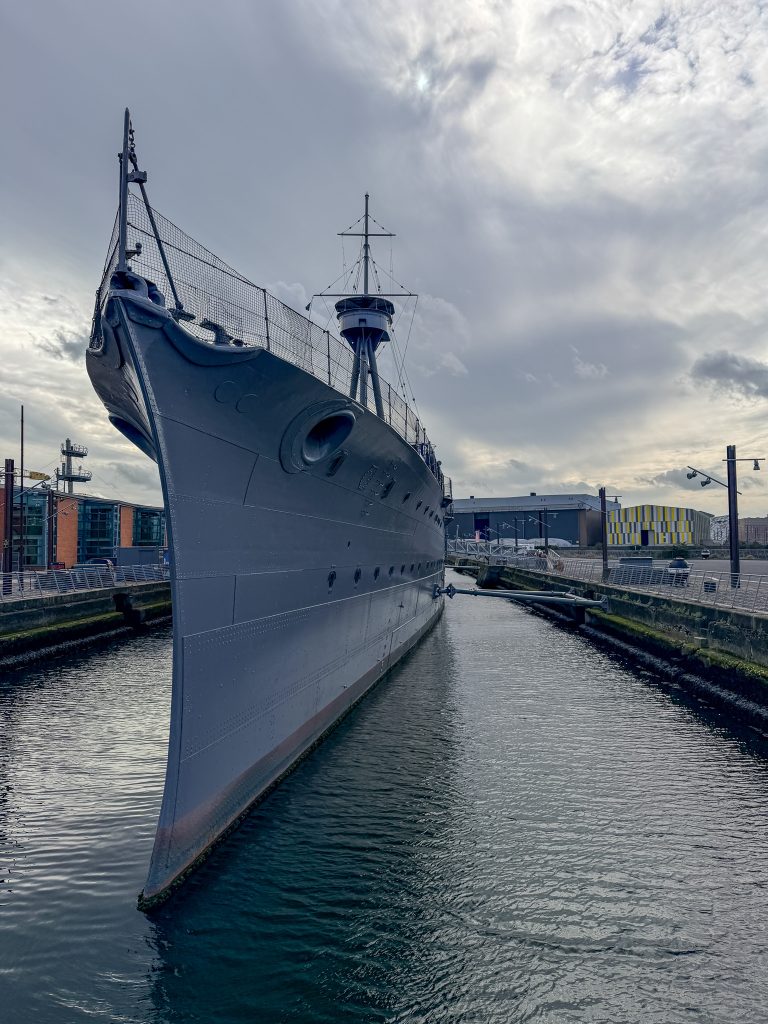
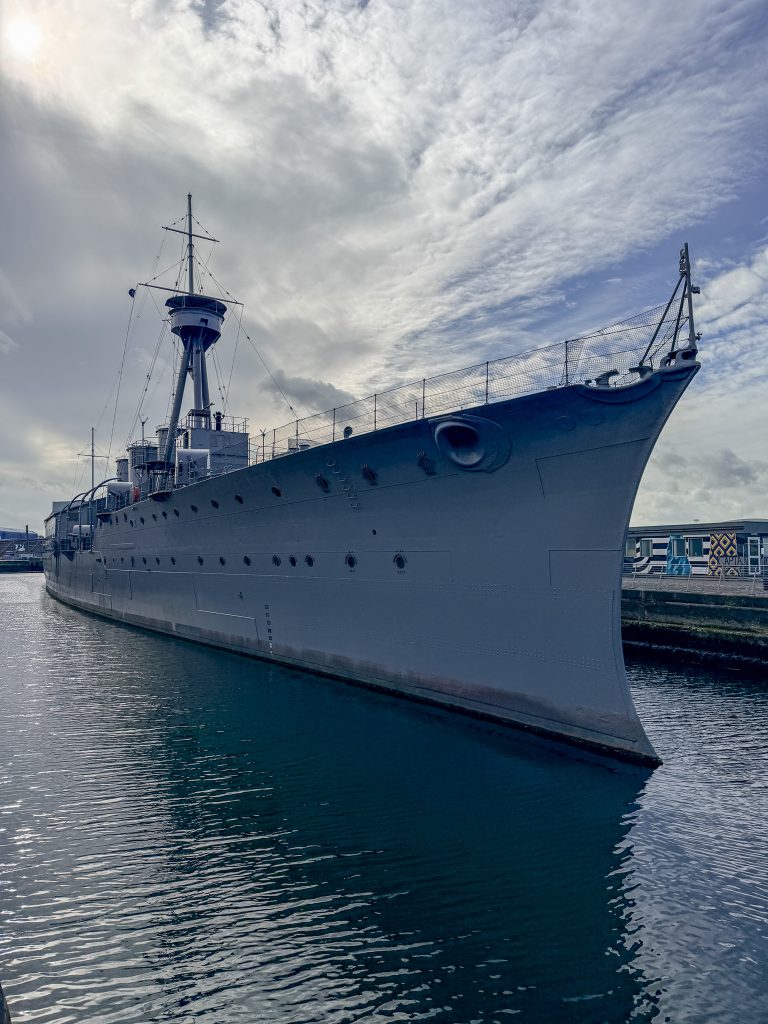
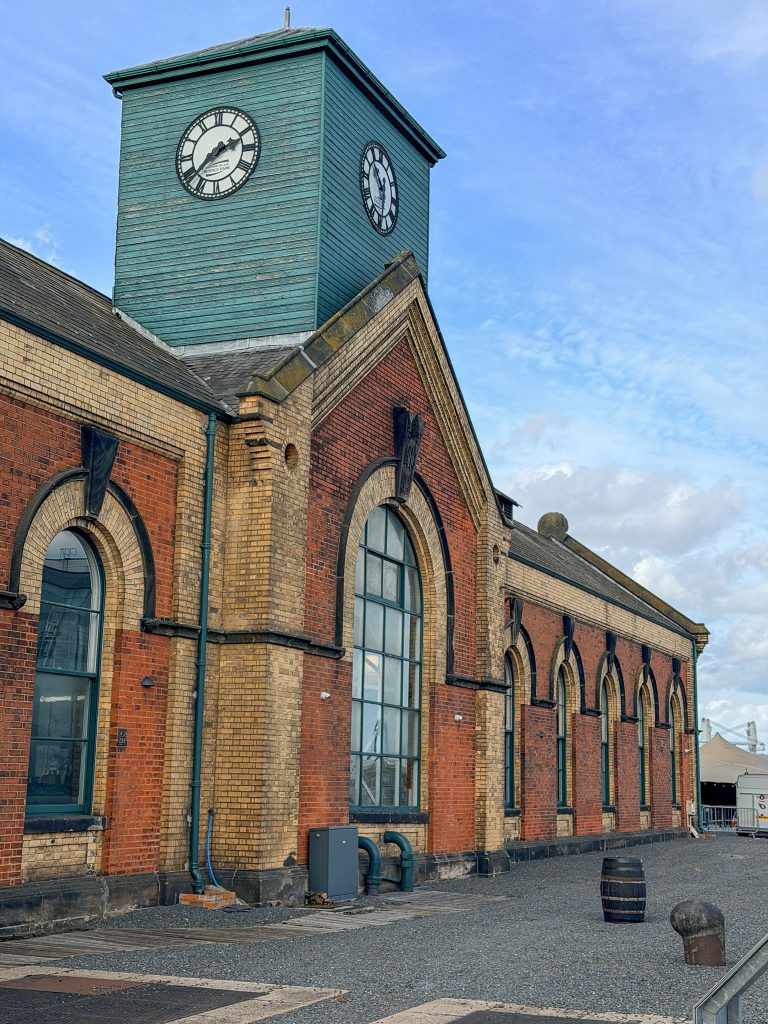
From the Titanic Quarter it’s a walk along the water to the old Harland & Wolff docks. HMS Caroline sits in the Alexandra Graving Dock, opened in 1889. She’s the last surviving ship of the Battle of Jutland. Beside her is the Thompson Graving Dock. After much wandering around trying to find a gate in the fence around the dock, the way in turns out to be through the distillery in the old Pump House. Apart from two people when I first arrive, I’m the only person wandering around the dock.
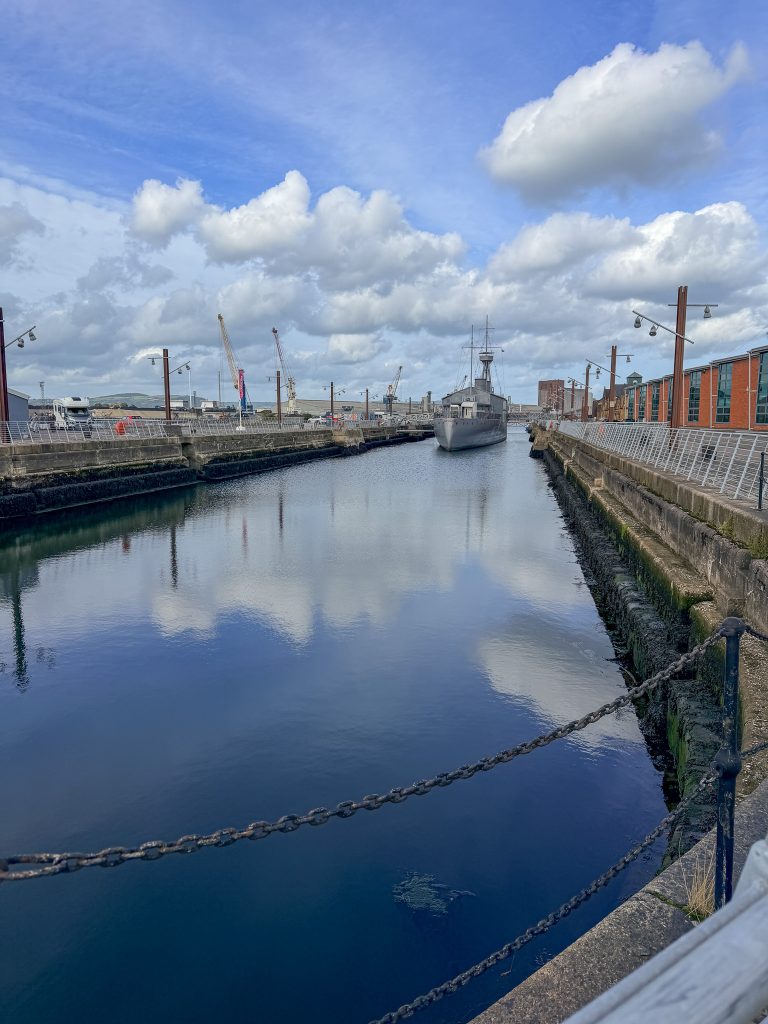
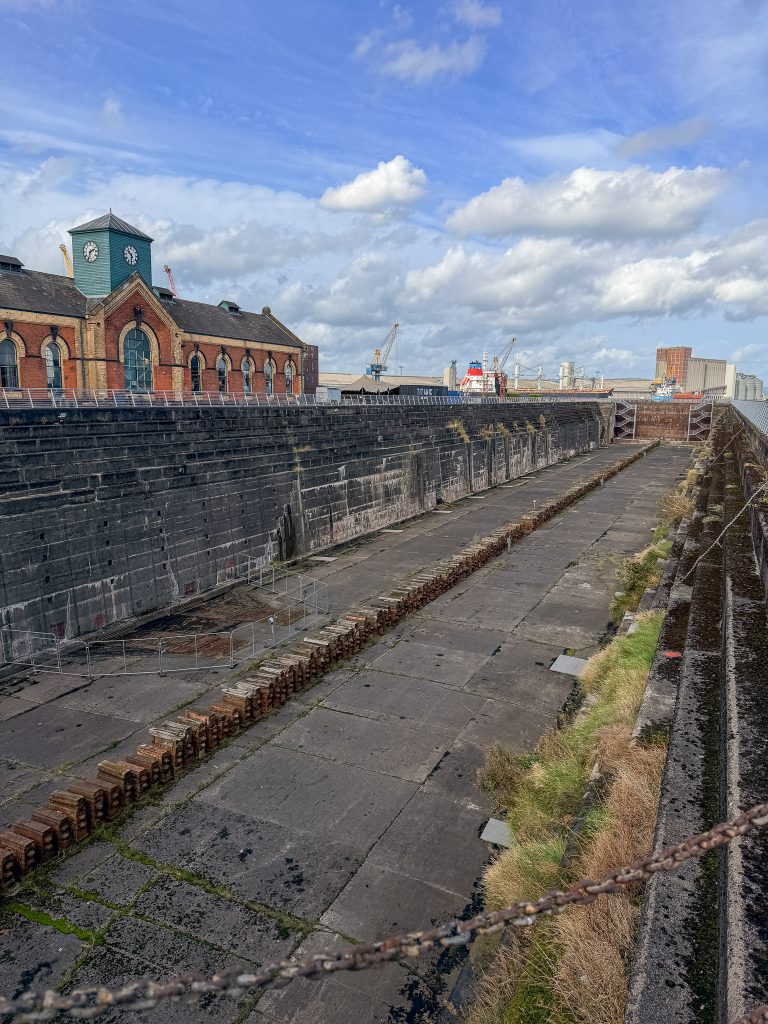
It was built for RMS Olympic and Titanic, and when it opened in 1911 it was the largest graving dock in the world — 850 feet long and 100 feet wide at the floor. It took eight years instead of the planned three, and cost £350,000. There’s just 1 foot 9 inches of clearance on each side of an Olympic-class hull at the gate. Ships were hauled in by hand: sixteen men pushing on the eight bars of a capstan. Then the Pump House emptied about 23 million gallons in under two hours.
Titanic was fitted out afloat at the wharf, and only came into this dock on 3 February 1912, for her propellers to be fitted and to have her hull painted. At the start of March she had to be floated out again so Olympic could come in for a new propeller blade. The two ships were swapped on a single high tide a few days later. Titanic left the dock for the last time around 8 March. That repair is what pushed her maiden voyage from 20 March to 10 April — this is where she last rested on dry land.
The keel blocks run down the centre of the floor. They’re what a ship’s keel settled onto as the water went out, and each had to sit under a frame or the hull could be damaged. Bilge blocks held the sides, and the stepped upper walls took the timber shores that kept a docked ship upright. The keel blocks are often described as the ones Titanic sat on. The dock worked until 2002, though, so the timber at least will have been renewed since. The last ship in was the Elektron in November 2000, brought in sinking.
The stairs down to the floor are closed. Up to about 2020 you could walk the length of the floor on the Pump House tours. The site was barricaded from late 2021 while the Pump House became a distillery, and now the only way down is Titanic Distillers‘ guided Dock Tour — 66 steps, about an hour, from £10.
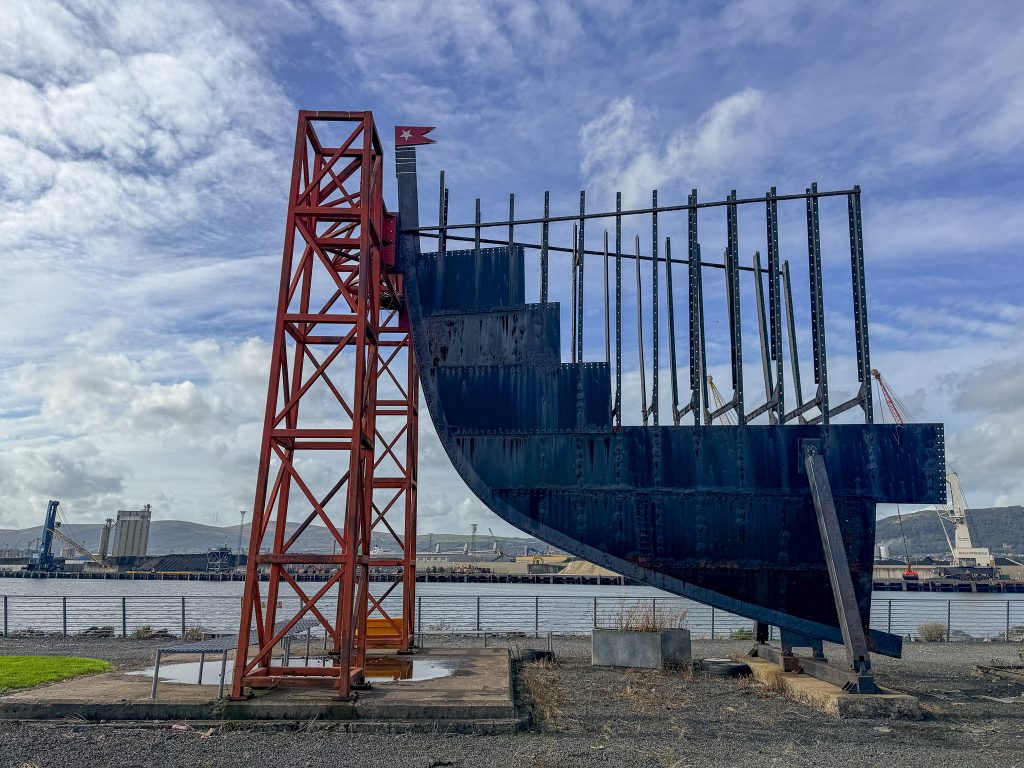
The plaque on the Pump House says the dock “was completed in 1911 and named by the Lord Lieutenant of Ireland… Baron Wimborne… on the 20th May 1915”. A replica of the bottom of Titanic’s bow stands beside it — over 30 feet high, 16 tons and 3,500 rivets. The sign adds that she had over three million rivets.
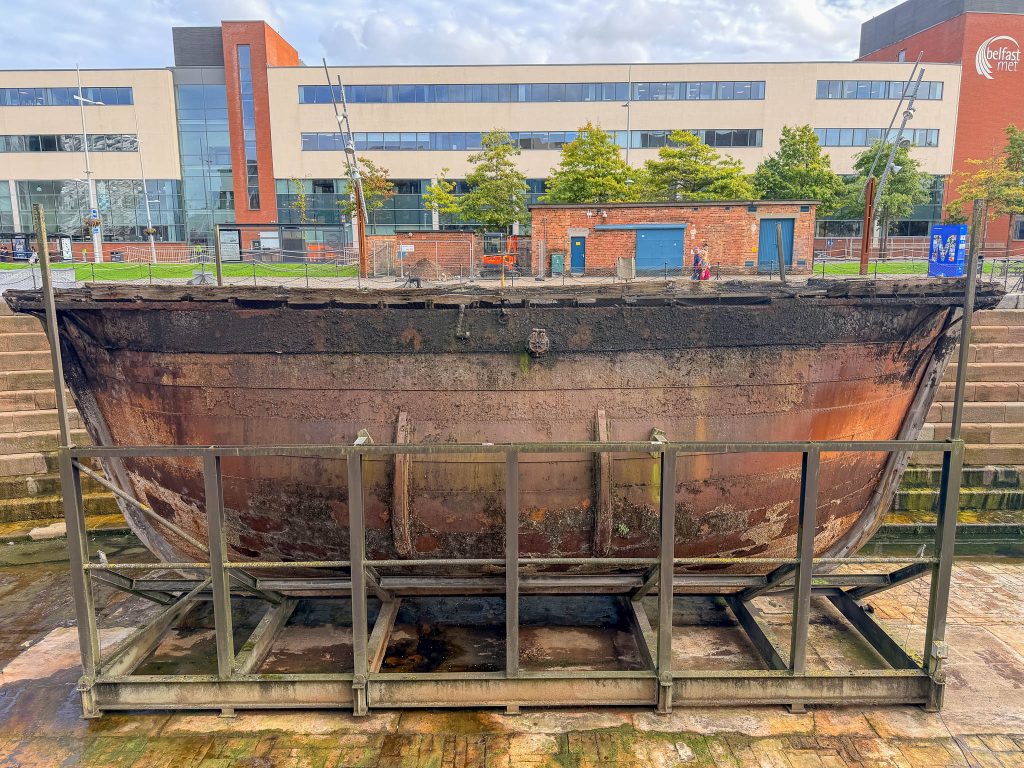
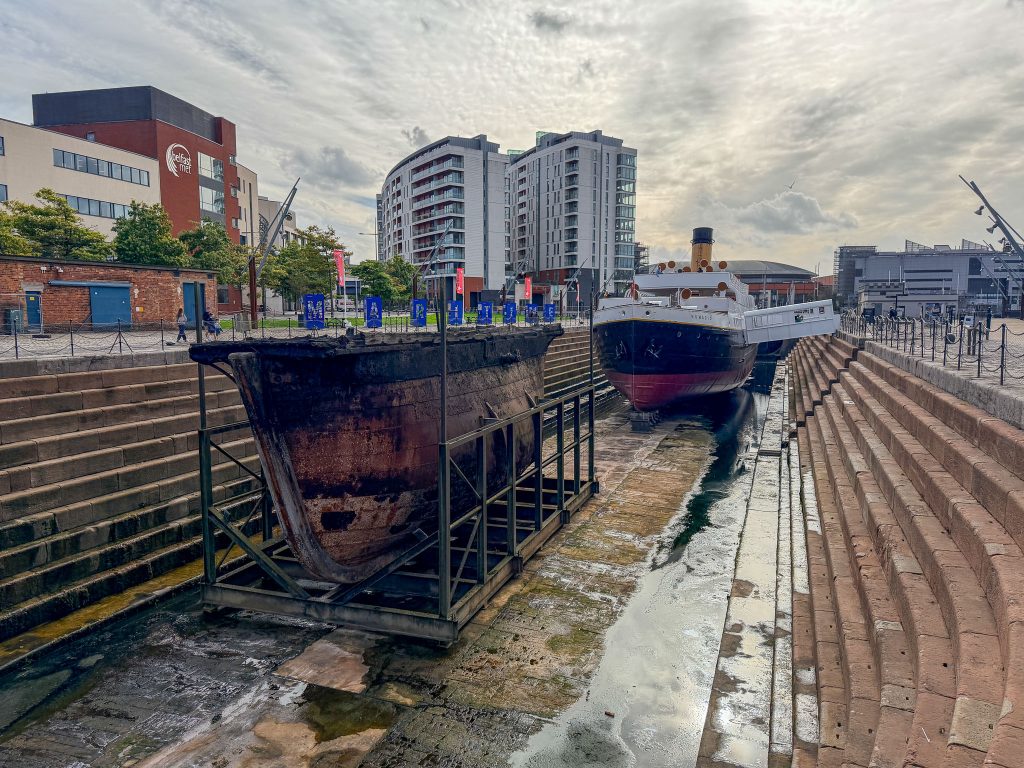
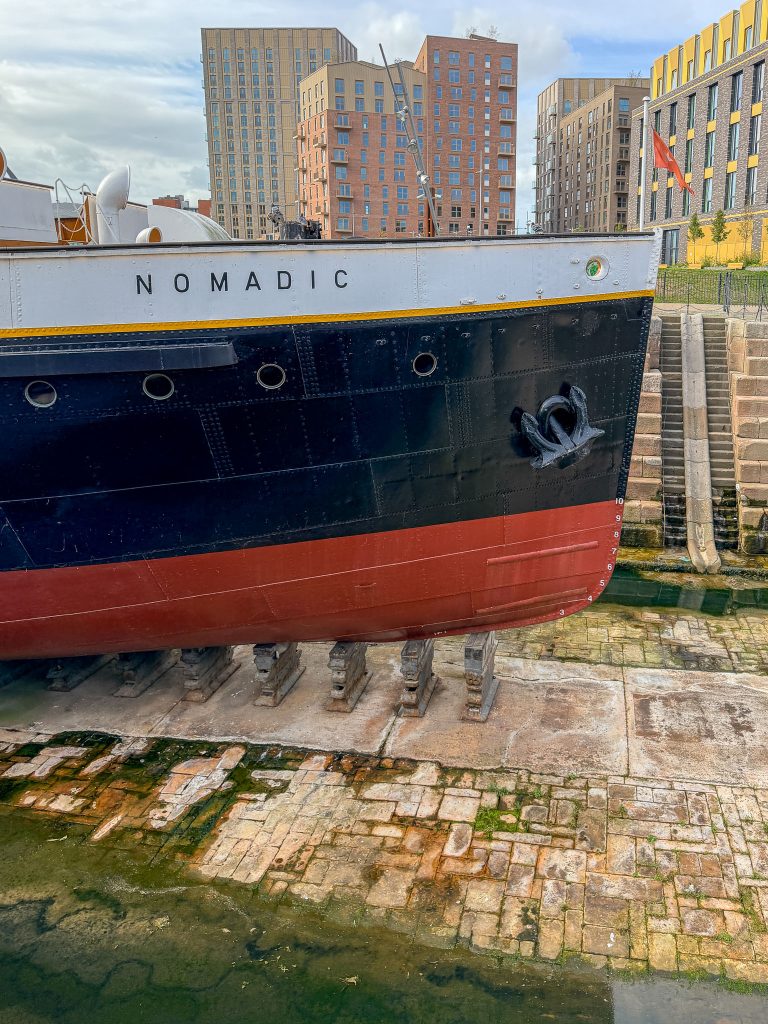
At Hamilton Dock the 1867 caisson — the floating gate that sealed the dock — is propped up on a steel cradle. It’s one of the oldest surviving things Harland and Wolff built, launched like a ship as Hull No. 50. SS Nomadic, Titanic’s last surviving tender, sits behind it.
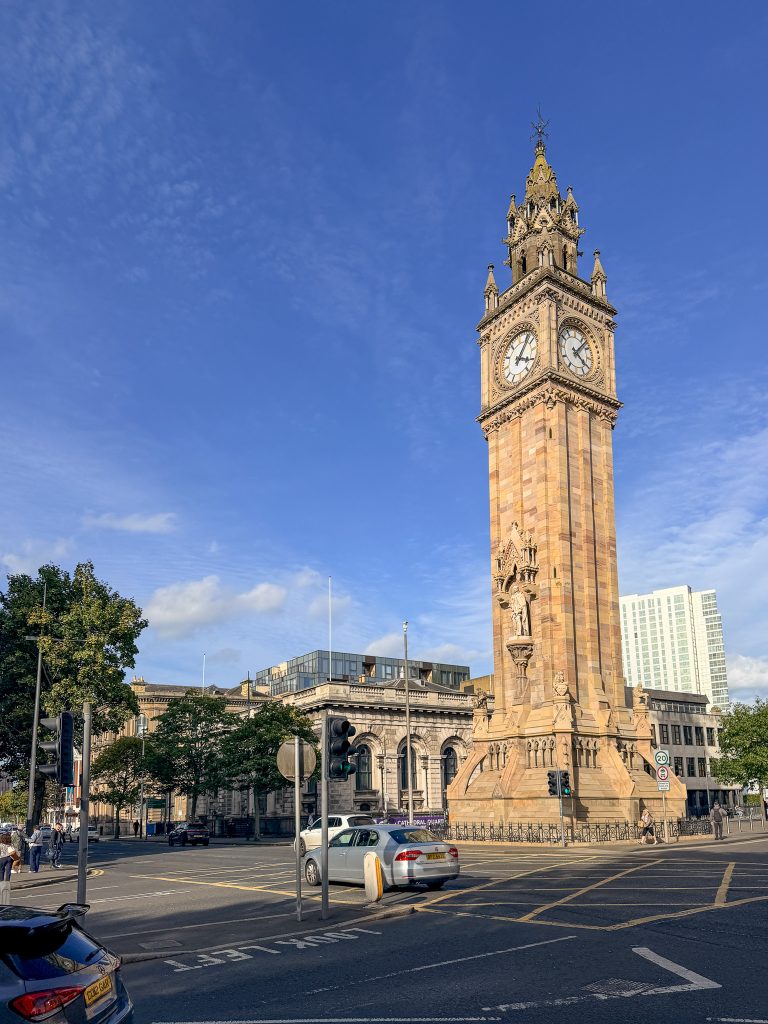
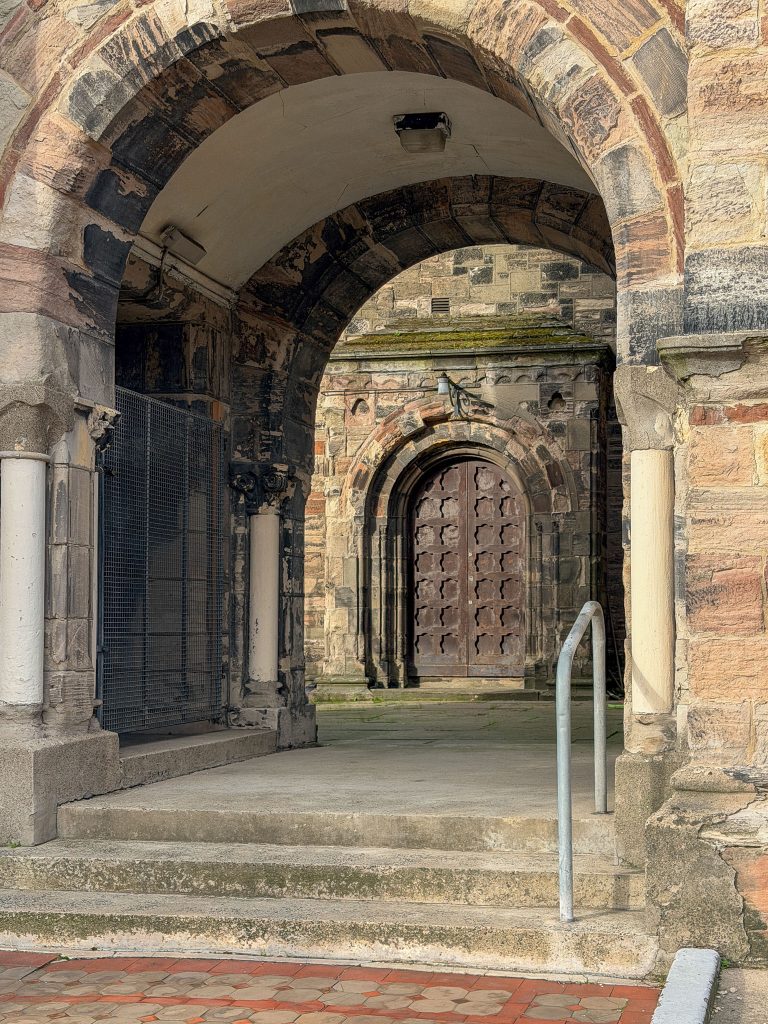
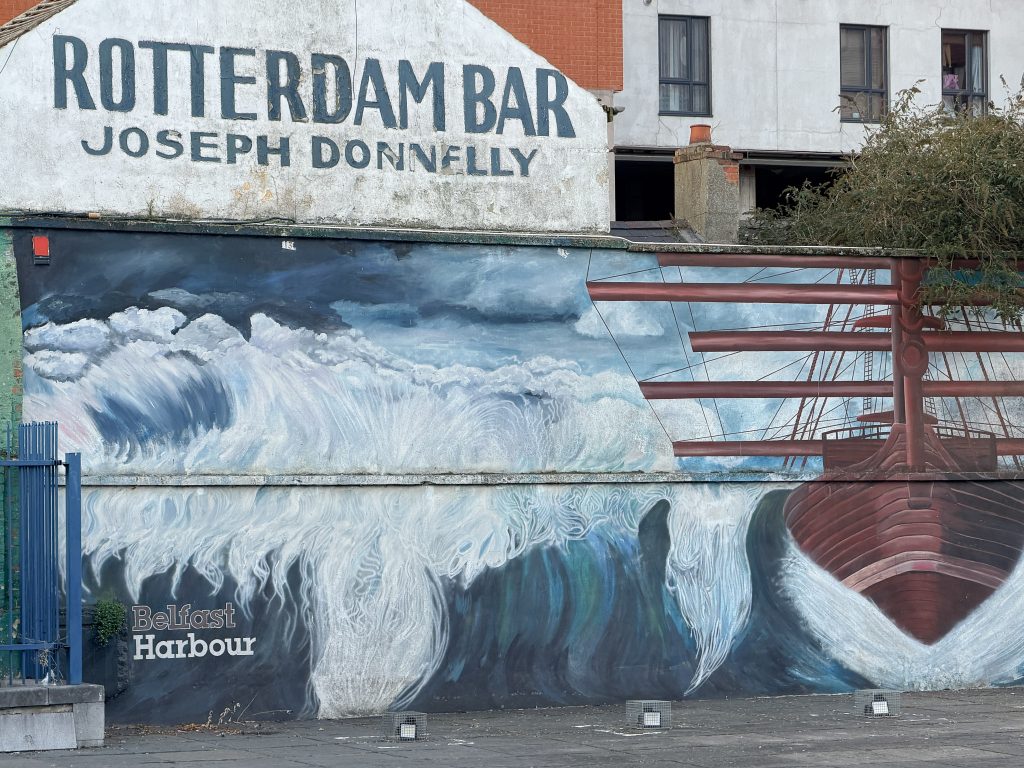
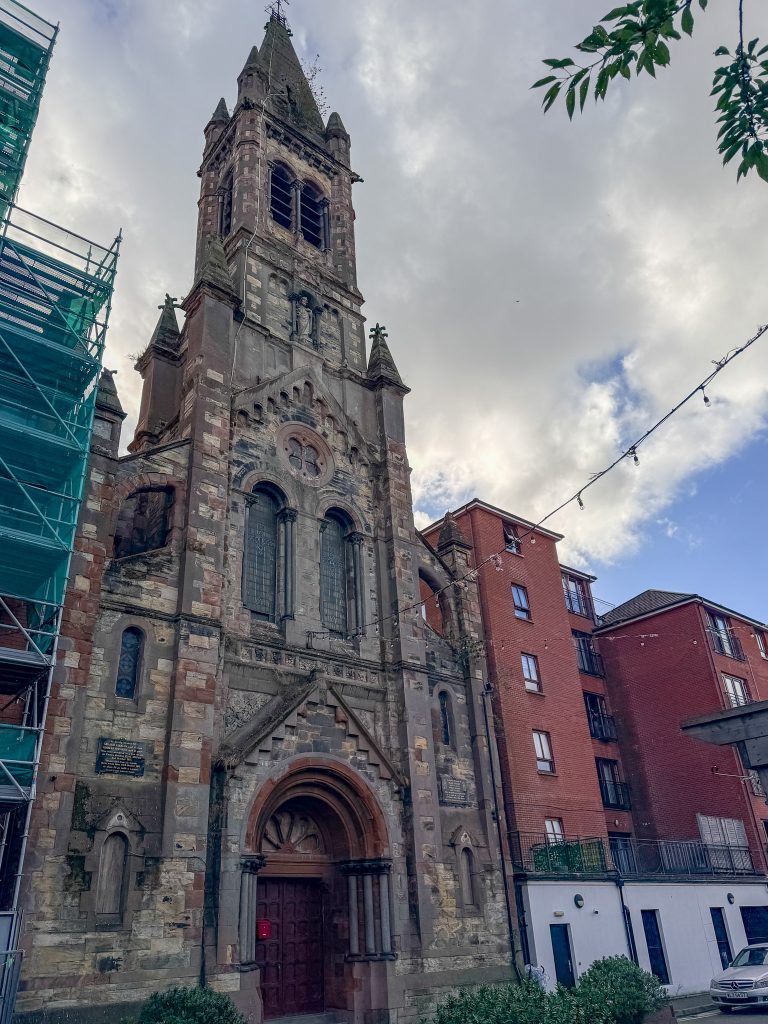
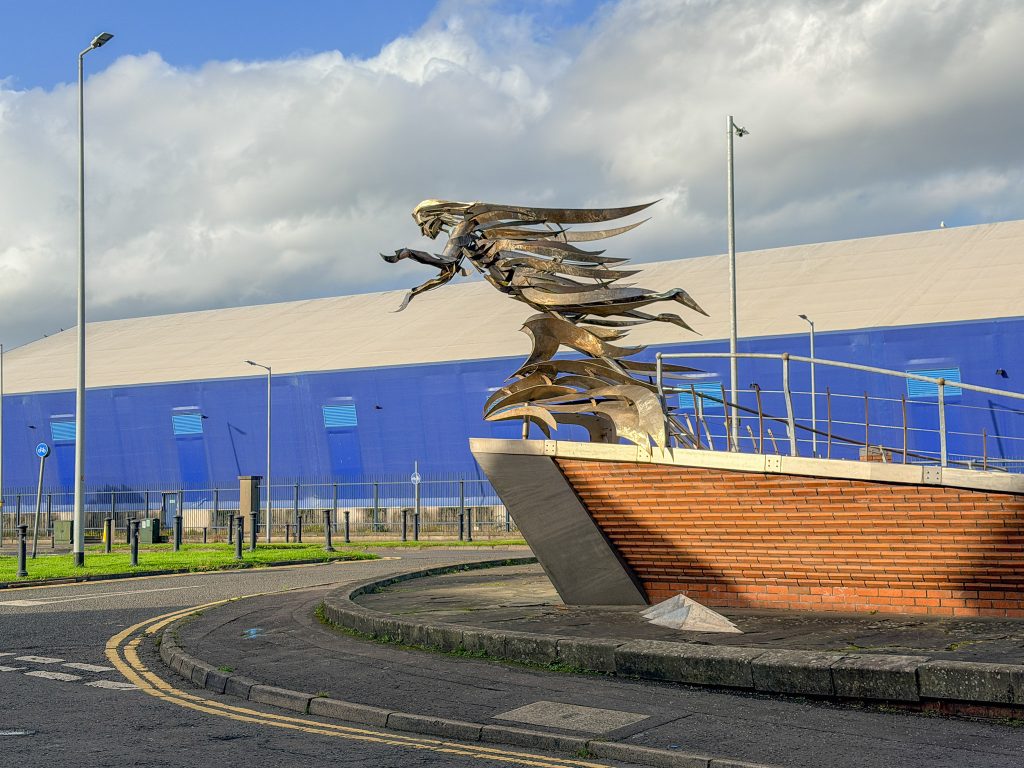
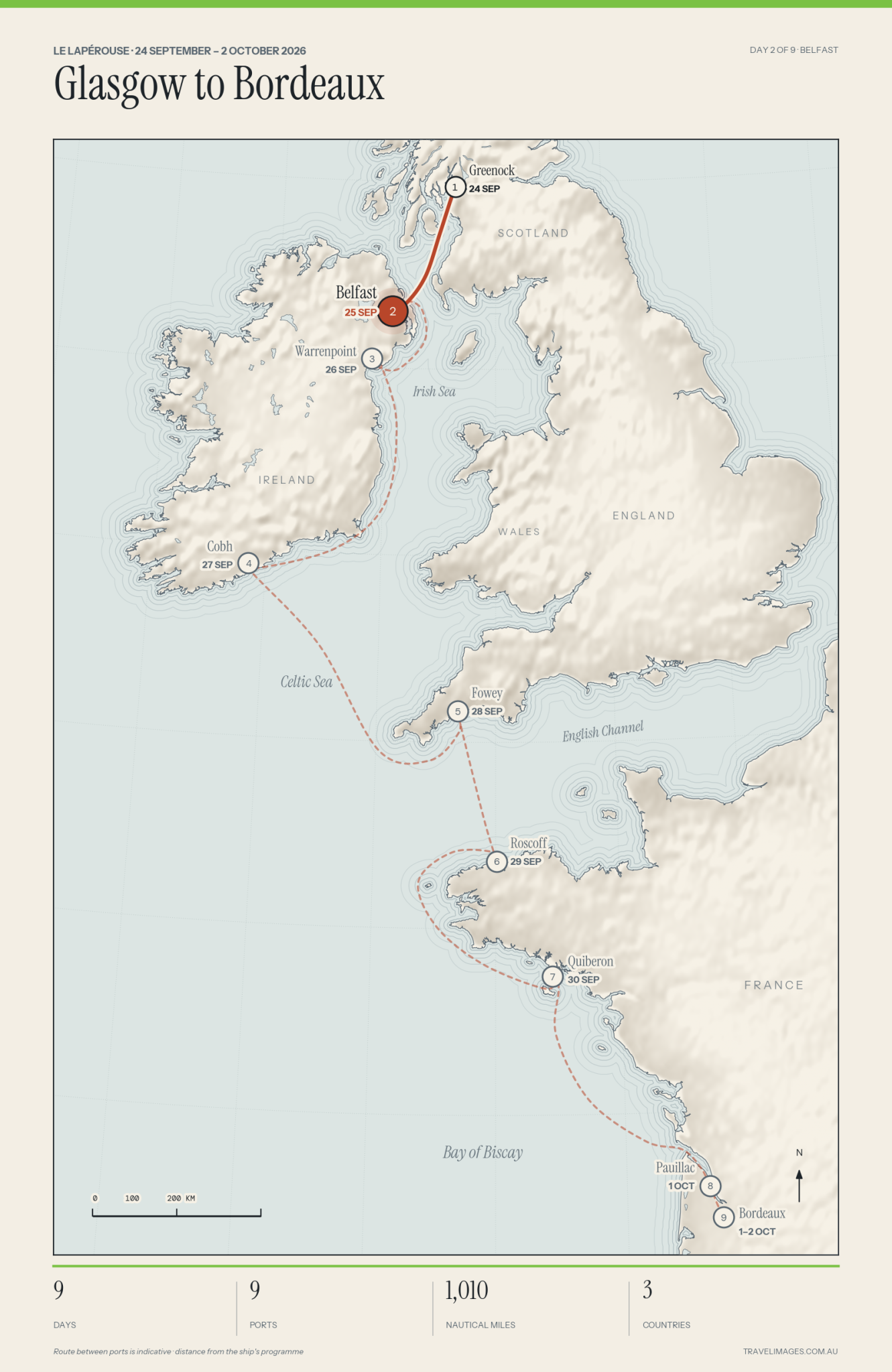
Then comes the walk back to Le Laperouse through Sailortown. There’s the Albert Memorial Clock and Sinclair Seamen’s Presbyterian Church, built in 1856 — its pulpit is shaped like a ship’s prow, and the bell of HMS Hood rings for the evening service. The derelict Rotterdam Bar has a tall ship painted in a breaking wave along its wall, and further down the street, I can’t decide whether Maurice Harron’s Flying Angel is the stuff of nightmares or not. Probably depends on the viewing angle. That’s 15km on foot by the time I’m back on board, and we sail at 19:30 for Warrenpoint.