
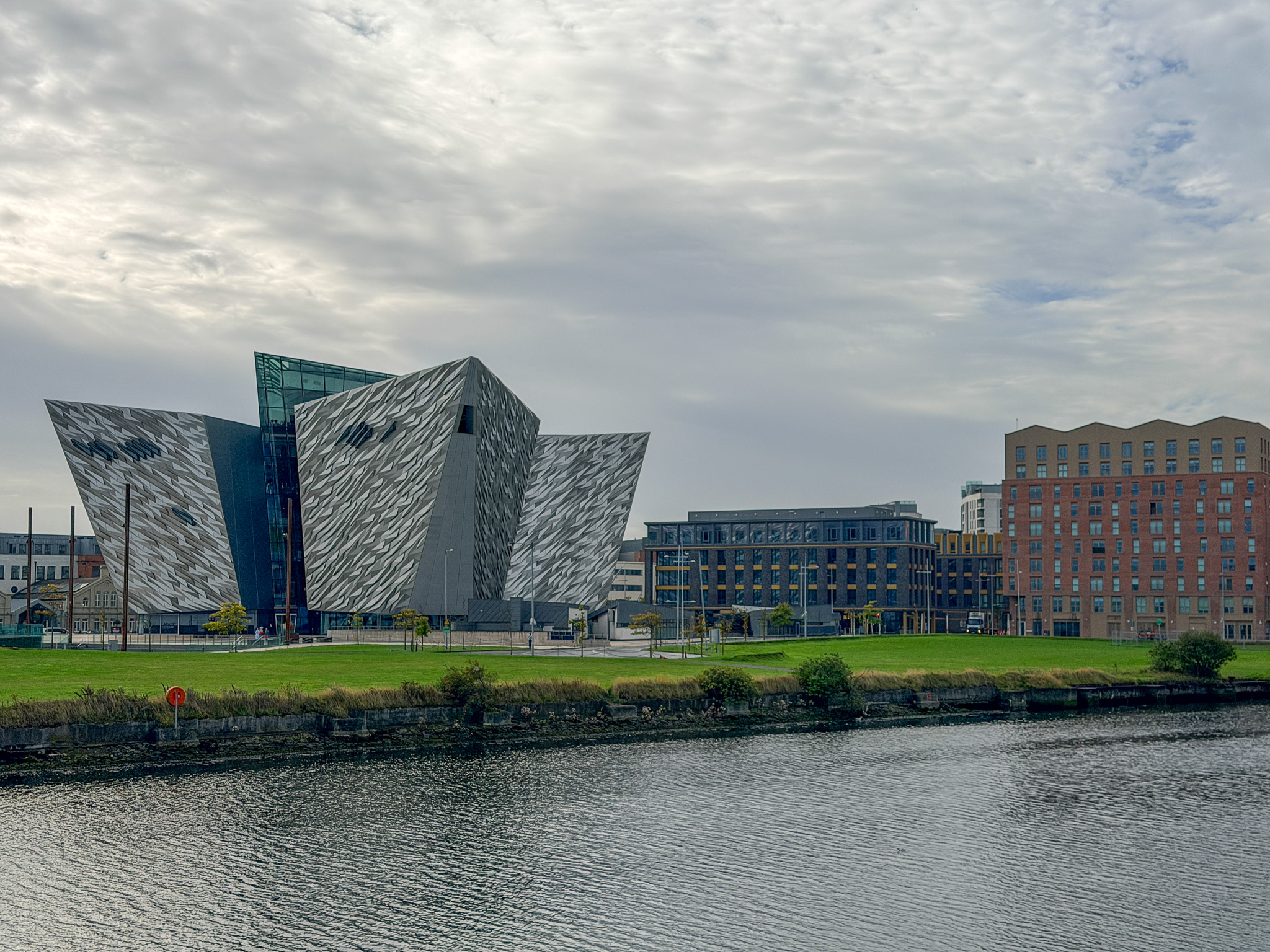
Belfast: the Titanic Quarter
Friday 25 September 2026
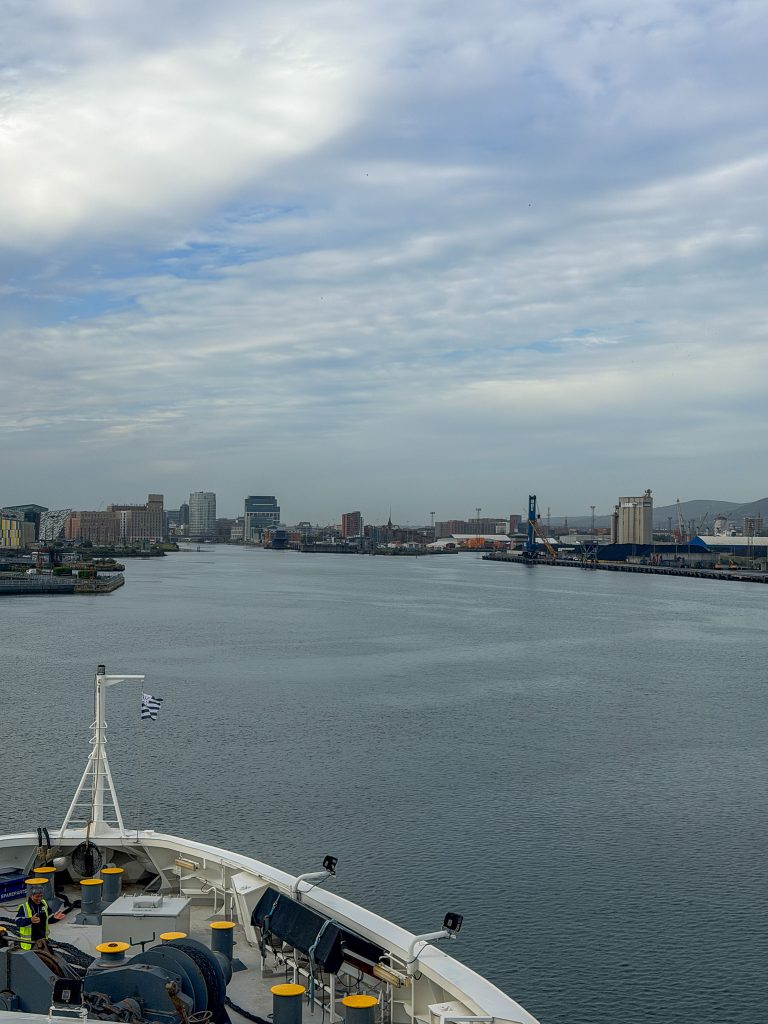
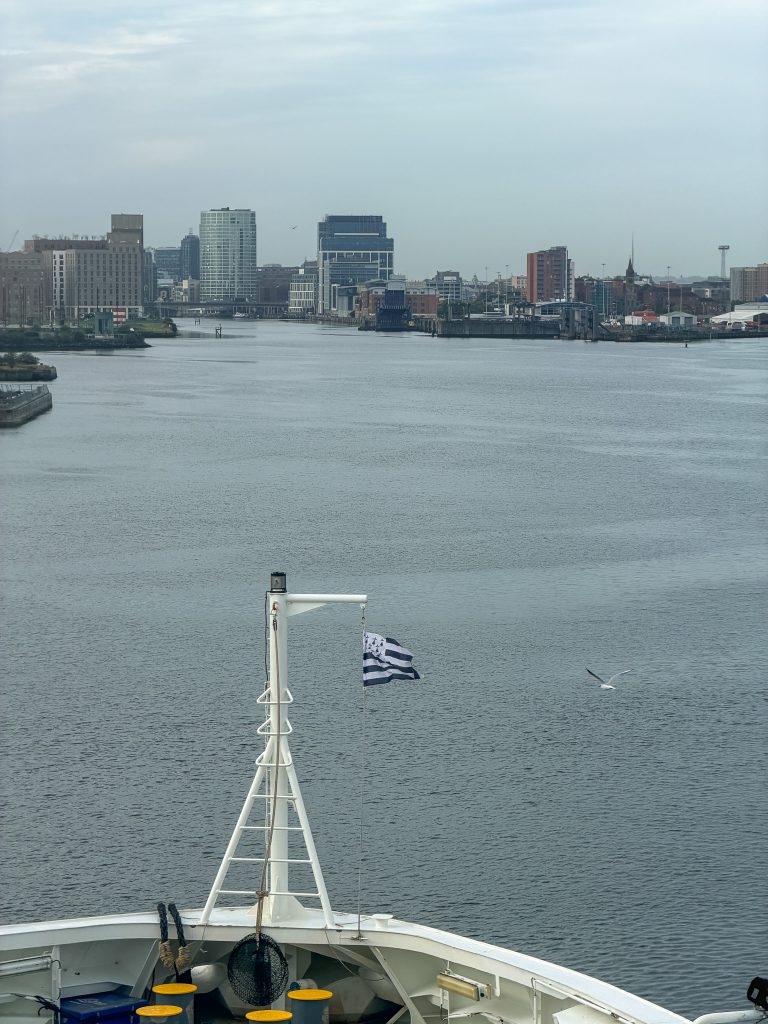
Belfast instead of Portrush, then. The programme has Le Lapérouse alongside at 10:00. I’m on the bow as we come up the Lagan past a Stena Line ferry, with the angular silver Titanic Belfast building on the east bank and the yellow Harland & Wolff cranes behind it. The red harbour pilot boat peels away. The forecast is 12°C and a 12km/h north-easterly, rising to 15°C in the afternoon.
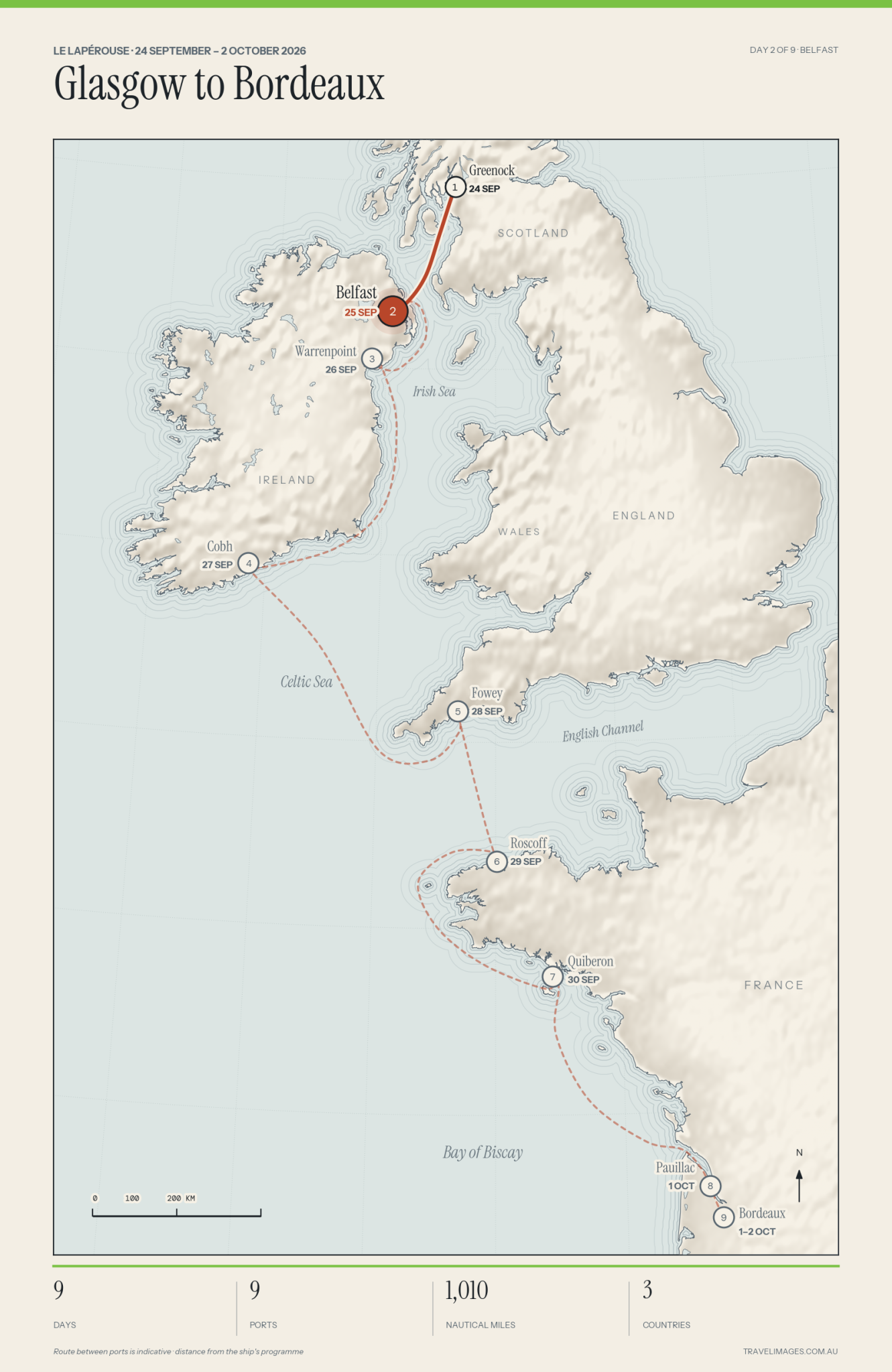
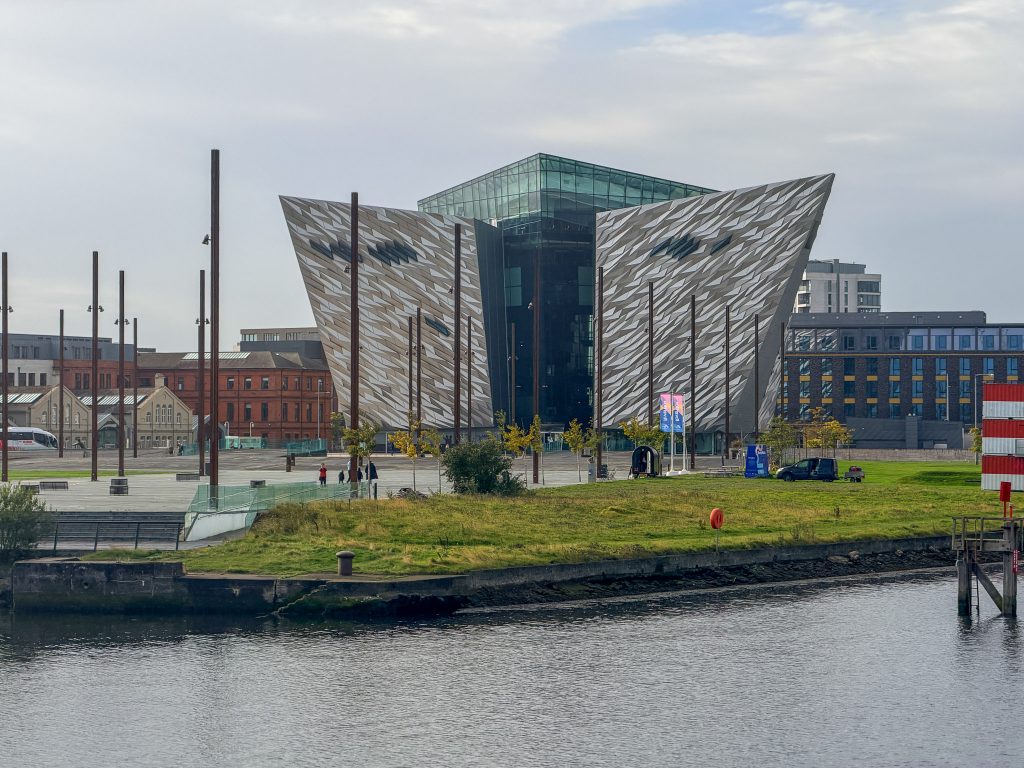
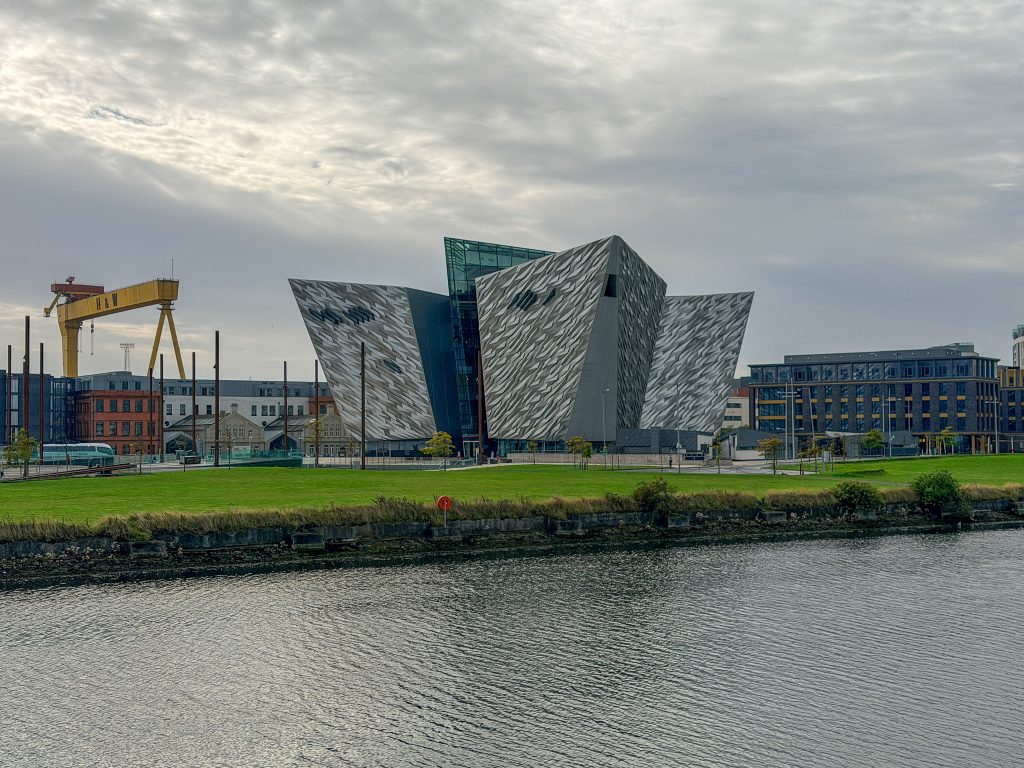
The Giant’s Causeway excursion leaves at 12:20 without me — three hours on a bus there and back, no thanks. I’ve opted out of all the ship’s excursions. They’re all bus trips, and if I wanted the school excursion experience I’d have booked a coach tour, not a luxury cruise. I walk instead. The pedestrian pathway from the cruise terminal isn’t particularly well marked, and meanders through the redeveloped waterfront (mixed use commercial and residential), and some derelict old pubs and churches. There’s great coffee to be had at Native, on the waterfront on the approach to Titanic Belfast.
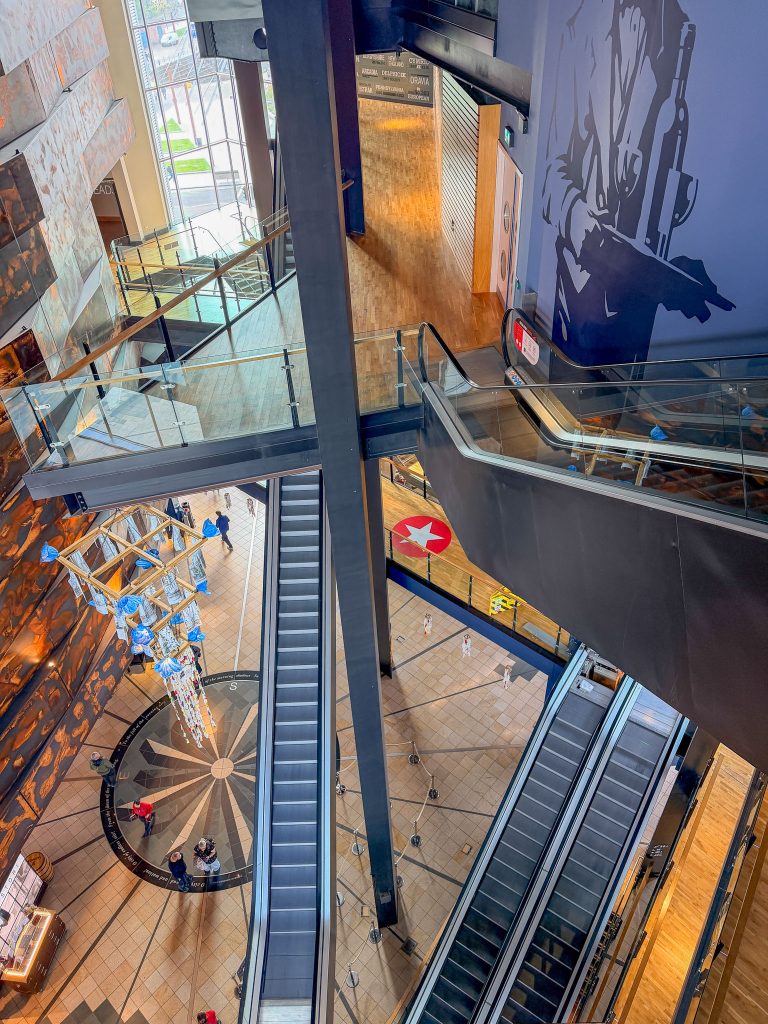
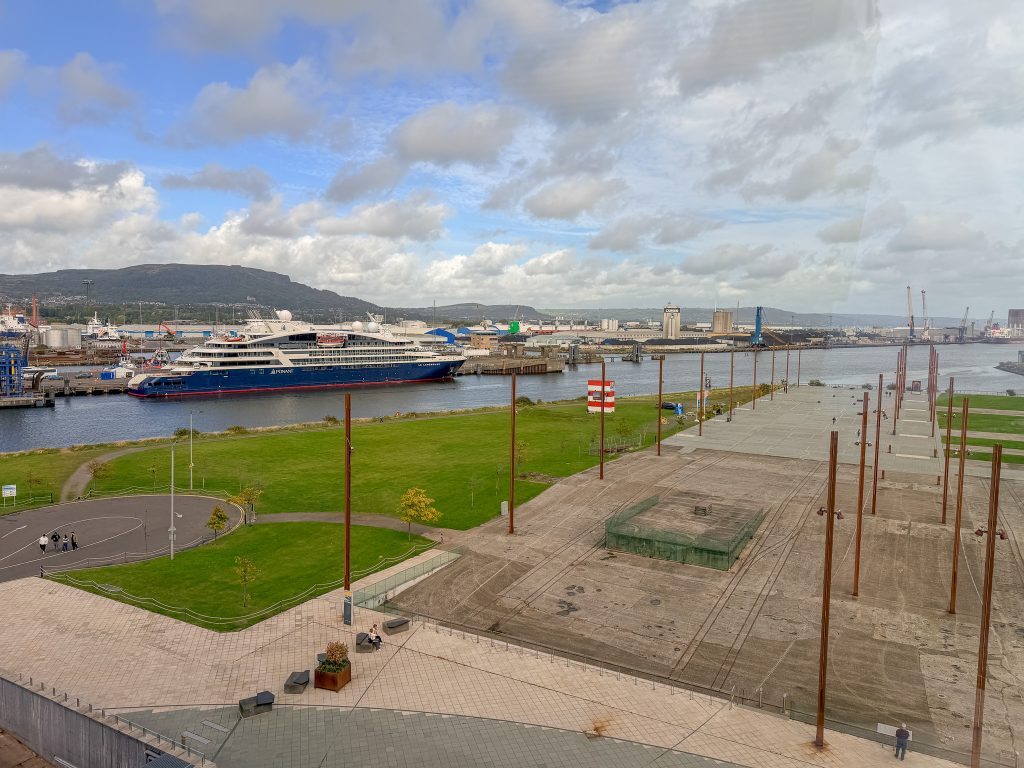
The Titanic experience is good but very crowded — escalators up through a dark steel atrium, and from the upper windows a view down onto the slipways where she was built, with Le Laperouse berthed across the water. Those slipways look as if they’ve been concreted over, and in a way they have. After Titanic and Olympic they kept building ships there — Britannic among them — until the great Arrol Gantry above them was pulled down in the late 1960s. For years afterwards the open slips were storage and car parking. When Titanic Belfast opened in 2012, the space was landscaped rather than excavated. The original concrete ramps at the landward end and the railway tracks set into the base are still there. Titanic’s slip has the plan of her promenade deck inlaid in white stone, with both hulls outlined in blue lights. The Olympic slip is a memorial garden, its lawn and decking in proportion to who survived in each class. The lamp posts stand where the gantry’s towers stood.
On the Titanic Walkway, in a glass drum, is the Great Light. It’s a 7-metre, 10-tonne lighthouse optic made in Paris for Tory Island in 1887, and it lit Mew Island from 1928 until 2014. I keep wandering along the waterfront until I reach what I saw on the way into the port – the Thompson Graving Dock.